


Dishwasher Backing Up into the Sink: Air Gap, High-Loop, and Branch Tailpiece Corrections – Where Each Fits and Why
A dishwasher should drain fast and disappear from mind. Water surging into the sink during a cycle tells a different story. That backup means the drain path can’t move water quickly enough, or a simple backflow safeguard never went in. Homeowners across Strongsville and the entire Northeast Ohio region see this most during the dinner rush or after a sink full of dishes. The good news: three fixes handle nearly every case, an air gap, a high-loop, and a corrected branch tailpiece connection. Each one solves a specific failure, and the right pick depends on your sink setup, local rules, and how your dishwasher ties into the drain. This guide breaks down how the system should work, why water shows up in the sink, what each correction does, and how to choose the best path so your dishwasher and sink play nice again.
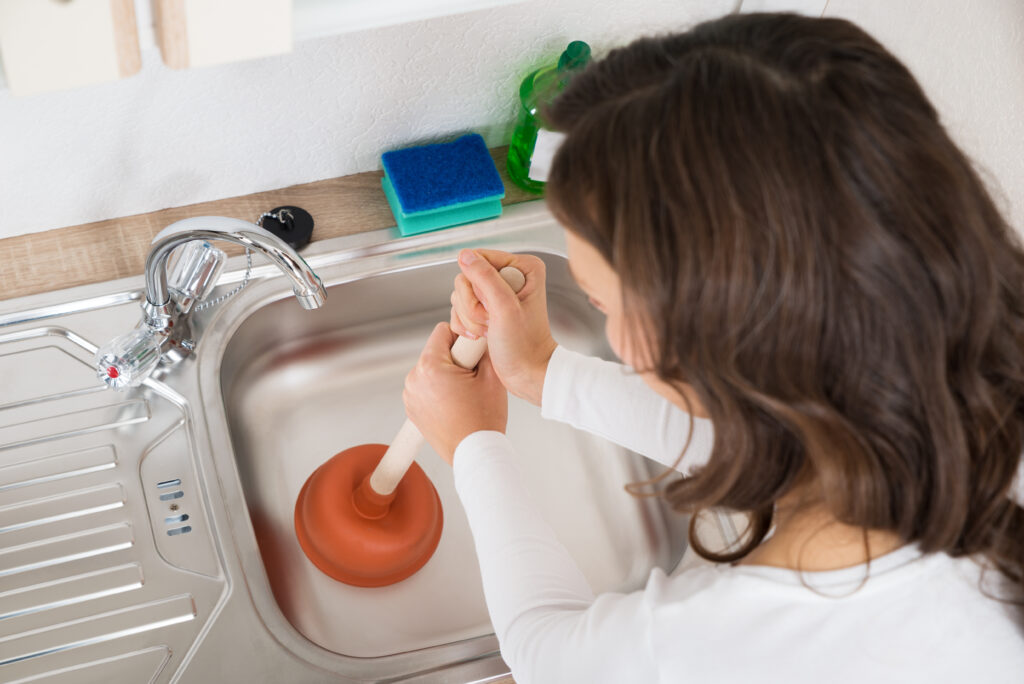
How a dishwasher should drain (and why backups hit the sink)
Your dishwasher uses a small pump to push wastewater through a 7/8″ drain hose to one of two places:
- A dishwasher branch tailpiece under the sink
- A garbage disposal inlet (after removing the knockout plug)
From there, water heads through the P-trap, into the wall arm, and out to the home’s larger drain and vent system. Two everyday issues cause sink geysers during a cycle:
- Restriction downstream of the tie-in
Gunk in the P-trap, a baffle tee packed with grease, or buildup in the wall arm slows flow. The dishwasher still pumps, so the water finds the path of least resistance, the sink. - Missing backflow protection
Without an air gap or proper high-loop, sink water can fall back toward the dishwasher or burp into the sink opening right beside the tailpiece.
You fix the first by clearing or rebuilding the sink drain pieces. You fix the second by adding a simple, code-recognized backflow safeguard.
Air gap vs. high-loop vs. branch tailpiece: what each does
Think of these as layers:
- Branch tailpiece = the connection point under the sink
- High-loop = a routing method for the hose that reduces backsiphonage
- Air gap = a device that breaks any siphon with an open-to-air break
All three matter. The branch tailpiece or disposal inlet gives the pump a legal place to discharge. The high-loop or air gap keeps dirty sink water out of the dishwasher. Many kitchens need a branch tailpiece correction plus either a high-loop or an air gap.
The air gap: best defense and often the cleanest fix
What it is
A small, vented cap on the sink deck with two hose barbs under the counter. The dishwasher hose goes up to the air gap; a second hose drops down from the air gap to the disposal or branch tailpiece.
What it solves
- Stops back-siphonage cold by introducing air into the line
- Keeps a full sink from siphoning into the dishwasher
- Helps diagnose clogs. If you see water exiting the air gap cap during a drain, the restriction sits after the air gap (tailpiece, disposal, trap, or wall arm)
Where it fits best
- Kitchens in cities that require air gaps (many Northeast Ohio inspectors accept high-loops under IPC; some manufacturers and local programs still want air gaps)
- Homes with frequent sink backups or slow drains
- Countertops that already have a spare hole (or plan to add one during a faucet swap)
Key install notes
- Mount on the counter or deck above the flood rim of the sink
- Run a short, smooth, downward hose from the air gap to the disposal/tailpiece
- Use the correct hose size and clamps; avoid kinks and sags
- Pop the air gap cap off and clean it during future maintenance
Pros
- Strongest protection and best for inspection
- Easy visual cue during troubleshooting
Watch-outs
- Needs a deck hole
- Cheap caps rattle; pick a solid unit to match your faucet finish
The high-loop: fast, tidy, and widely accepted
What it is
A simple loop of the dishwasher hose that rises to the underside of the countertop (usually 32–34 inches off the floor) before dropping to the disposal or branch tailpiece.
What it solves
- Reduces back-siphonage by keeping the hose above the sink’s flood level
- Stops sink water from running downhill into the dishwasher hose
Where it fits best
- Kitchens without a spare deck hole
- Jurisdictions that accept high-loops (many in Northeast Ohio do under the International Plumbing Code)
- Tight sink bases where a clean, simple route matters
Key install notes
- Secure the hose to the underside of the counter with a clip or strap
- Keep a steady downward slope from the loop to the drain tie-in
- Use the shortest hose run that still reaches cleanly
Pros
- No deck changes and low cost
- Fast correction that often ends backups
Watch-outs
- Not a true “air break”; some codes and makers still want an air gap
- Loops that sag lose protection, so secure it firmly
The branch tailpiece correction: the quiet fix most kitchens need
What it is
A sink tailpiece with a side inlet designed for the dishwasher. The dishwasher hose ties in before the trap, which keeps sewer gas in check and keeps the dishwasher on the proper side of the plumbing trap.
What it solves
- Stops illegal or sloppy tie-ins (like tapping in after the trap or into a thin, unreinforced tube)
- Lines up the connection at the right height and angle for smooth drainage
- Prevents disposal discharge from blasting straight into the dishwasher line when paired with a baffle tee
Where it fits best
- Any sink without a disposal
- Any setup where the current tie-in sits after the P-trap (wrong and clog-prone)
- Older kitchens with mixed, undersized, or flimsy fittings
Key install notes
- Install the branch tailpiece between the sink basket and the P-trap
- Use a baffle tee on double-bowl sinks so disposal flow doesn’t cross over into the dishwasher inlet
- Keep the run short and smooth; avoid corrugated adapters that narrow the path
Pros
- Restores a clean, legal connection
- Reduces turbulence and splash-back under the sink
Watch-outs
- Cheap thin-wall parts crack; pick a solid brass or heavy-duty ABS piece
- Misaligned traps stress joints and leak; dry-fit before you tighten
“My dishwasher backs up into the sink.” Use this decision path.
- Run the disposal for 10–20 seconds.
Food in the disposal inlet blocks the dishwasher outlet. That quick grind often clears it. - Confirm the disposal knockout plug.
New disposals ship with a solid plug in the dishwasher port. Many installs leave it in. Remove it with a punch and pliers. - Pop and clean the air gap cap (if present).
A toothpick, lemon seeds, or grease at the cap can choke the outlet. - Check the hose route.
Add a high-loop to the underside of the counter. Replace a kinked or extra-long hose. - Inspect the branch tailpiece.
Move the dishwasher inlet to a proper branch tailpiece before the trap. Add a baffle tee on double-bowl sinks. - Clear the P-trap and wall arm.
Pull the trap, clean it, and drill a small hand auger into the wall arm 6–10 feet. Heavy grease lives there. - Still backing up? Install an air gap.
Strong protection, clean diagnostics, and a happier inspector.
Ohio Buckeye Plumbing runs this same checklist on service calls in Strongsville and across Northeast Ohio. Most backups clear after step 5 or 6; stubborn lines need a deeper cable or a camera.
Where each fix shines in real Strongsville kitchens
- Busy family with a double-bowl sink and a disposal
We add a baffle tee, swap in a branch tailpiece, secure a high-loop, and clear the wall arm. The disposal no longer blasts into the dishwasher branch, and the loop blocks backwash. - Condo with limited counter space and frequent sink backups
We install an air gap, shorten and re-route hoses, and rebuild the trap set. The air gap vents pressure spikes and gives the inspector a clear pass. - Older ranch with no disposal
We replace a thin, crushed side nipple with a solid branch tailpiece, set a high-loop, and clean the arm to the stack. The dishwasher drains quietly, and the sink no longer surges.
Mistakes that trigger repeat callbacks (and how we avoid them)
- Dishwasher hose tied in after the P-trap
That move creates a second trap and invites sewer gas and clogs. We always connect before the trap. - No knockout removal on new disposals
The dishwasher pump hits a brick wall. We knock it out and clear the chips from the inlet. - Hose with bellies and kinks
Water stalls and grows sludge. We shorten the run and support the loop. - No baffle at the double-bowl tee
The disposal shoots back to the dishwasher branch. We install a baffle tee to calm the cross-flow. - Long corrugated adapters
Ridges catch grease. We use smooth-bore hose and proper barbed fittings. - Skipping the wall arm cleanout
The trap looks fine, but the elbow in the wall sits full of mud. We cable to a good distance, not just the first bend.
Code and local practice in Northeast Ohio
Many Northeast Ohio cities working under IPC accept high-loops as the required backflow method for residential dishwashers. Some inspectors, water providers, or manufacturers still call for an air gap. We confirm the current rules during your visit. Commercial kitchens follow stricter rules; most of those installs get air gaps by default. No matter the method, we keep the dishwasher connection before the trap and size hoses and fittings for a free-flowing path.
Hard water, detergents, and why clogs return
Our region’s hard water leaves scale. Modern detergents carry fats that cool and stick inside cool pipes, especially in long, flat runs under big farmhouse sinks. Add a weekly practice:
- Run hot water at the sink for 20–30 seconds before starting the dishwasher.
- Scrape plates but skip heavy pre-rinsing; food paste plus soap makes glue.
- Clean the air gap cap every couple of months.
- Grind the disposal with cold water for a few seconds after each load.
Small habits keep that narrow hose and trap clear.
FAQ: quick answers from our service techs
Do I need a check valve in the dishwasher line?
Most dishwashers include one at the pump. We rely on a high-loop or air gap for backflow protection, not an extra check jammed into the hose.
Will a new dishwasher fix the backup?
Not if the sink drain or tie-in fails. We always clear and correct the sink side first.
Why does water come out of the air gap cap?
That vent saved you from a flood inside the machine. The restriction sits after the air gap. We clear the tailpiece, trap, or wall arm.
Can I put the air gap under the sink?
No. It needs to sit above the flood rim to break a siphon.
My sink backs up only during big loads. What gives?
Grease in the wall arm narrows the line. The dishwasher’s steady pump exposes the pinch point. We cable the arm and rebuild the trap set.
What a pro visit from Ohio Buckeye Plumbing looks like
- Inspect hose routing, disposal inlet, and branch tailpiece
- Add a secure high-loop or install an air gap if you need one
- Rebuild the trap and baffle tee for smooth flow
- Cable the wall arm to the right distance
- Test through a full drain cycle and leave everything tight and dry
- Share simple care steps and note any future risks
We handle this work daily across Strongsville and the entire Northeast Ohio area. You get clear fixes, clean work, and a kitchen that stays dry during every cycle.
Stop sink backups fast. Call Ohio Buckeye Plumbing at (440) 283-9377 for air gap, high-loop, and drain fixes in Strongsville & Northeast Ohio.