


Storm Drain Overflowing on Your Property After Rain? Here Is the Fix
A storm drain or catch basin that overflows on your property every time it rains has not failed. It has filled. The sump at the bottom of the basin collects sediment, silt, leaves, and organic debris over months of use, and once that material rises high enough to block the outlet pipe, the basin loses the capacity it needs to handle even moderate rain. The fix is catch basin cleaning and outlet pipe clearing using high-pressure vactor equipment, not excavation. Ohio Buckeye Plumbing is licensed by the Ohio Construction Industry Licensing Board (OCILB), carries full general liability and workers’ compensation insurance, and holds an A+ accreditation with the Better Business Bureau. With more than 20 years of experience serving Northeast Ohio homeowners, we provide residential vactor truck services that restore storm drain capacity and prevent the yard flooding, foundation exposure, and mosquito breeding that follow a neglected catch basin. Read verified reviews on Google, Angi, and HomeAdvisor. Call (440) 283-9377 for service throughout Northeast Ohio.
What a Property Storm Drain and Catch Basin Actually Do
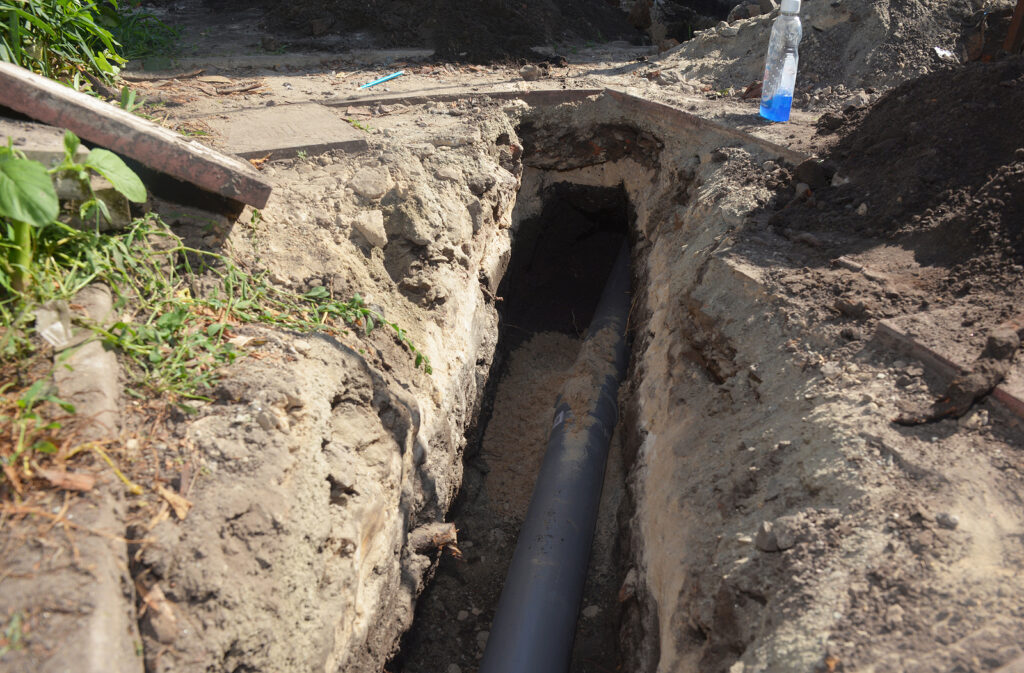
A catch basin is a below-ground inlet structure, typically a concrete or plastic box with a grated opening at ground level and an outlet pipe connecting to the storm drainage system. As rainwater flows into the basin, the box slows it down and allows sediment, debris, and fine particles to settle to the bottom of the sump while the cleaner water exits through the outlet pipe. The catch basin’s job is to act as a pre-treatment chamber that protects the downstream storm drain pipes from the sediment that would clog them. Residential catch basins appear at low points in driveways, at the base of yard drainage systems, near garage aprons, and wherever a property needs to collect and redirect surface runoff.
The distinction between storm drainage and sanitary sewer drainage matters for understanding the right repair approach. Storm drains collect rainwater and surface runoff and typically discharge directly to local waterways, rivers, or storm retention basins, often without treatment. The Northeast Ohio Regional Sewer District (NEORSD) administers stormwater programs throughout Cuyahoga County that set standards for how residential and commercial stormwater systems must be managed. A catch basin that overflows is a storm drainage capacity problem addressed by vactor cleaning. A sewer line backup from a separate sanitary system is a different issue entirely, addressed through rooter service and sewer inspection.
Why Your Property Storm Drain Overflows During Rain Events
Most residential catch basin overflow has one of four causes, and the appropriate fix depends on which one applies:
Sump Sediment Accumulation
Every time it rains, the incoming water carries fine sand, silt, clay particles, and road sediment into the catch basin. These particles settle to the bottom of the sump. Over months and years of rainfall, the sump fills from the bottom up. A catch basin whose sump has reached the outlet pipe opening has lost all effective capacity and will overflow at the first meaningful rain event. This is the most common cause of residential catch basin overflow throughout Northeast Ohio and is fully corrected by vactor sump extraction.
Leaf and Organic Debris Matting
In Northeast Ohio’s established neighborhoods with mature tree canopy, leaves, seed pods, and wet organic debris accumulate in catch basins throughout the fall and into spring. Wet leaves mat together into a dense paste that can block the grate opening, restrict inlet flow, and pack into the outlet pipe. A catch basin that performs adequately through summer may develop an overflow problem after a season of heavy leaf fall. Annual or twice-annual cleaning addresses organic debris accumulation in residential basins surrounded by mature trees.
Root Intrusion in the Outlet Pipe
Tree roots can enter residential storm drain outlet pipes through joint gaps and corrosion holes in older clay tile or corrugated metal drainage pipe. Root growth inside the outlet pipe creates a root mass that catches debris and progressively restricts flow, causing the catch basin to surcharge even when the sump itself is relatively clean. For outlet pipes with root intrusion, high-pressure jetting combined with vactor suction clears the root mass. A video camera sewer inspection of the outlet pipe confirms pipe condition when root intrusion is suspected after the sump is cleaned and flow still does not fully restore.
Outlet Pipe Structural Failure
Outlet pipes in older properties can develop structural problems over time, including pipe collapse from soil loading, pipe separation at joints, and complete deterioration in corrugated metal pipes. A structurally failed outlet pipe will not carry any significant flow regardless of how thoroughly the sump is cleaned. Camera inspection identifies structural pipe failure and distinguishes it from a blockage-related restriction, ensuring that the repair recommendation addresses what the camera actually shows.
How Vactor Truck Service Restores Your Storm Drain
Ohio Buckeye Plumbing’s vactor truck service combines an industrial vacuum system with high-pressure water jetting. The process for residential catch basin cleaning follows a consistent sequence:
- Site assessment: Our technician inspects the catch basin grate, measures sump sediment depth, and assesses outlet pipe accessibility before service begins.
- Vacuum extraction: The vactor hose is inserted into the catch basin sump and extracts all accumulated sediment, water, and debris until the basin interior is clean. This step removes material that no consumer-grade equipment can reach.
- Outlet pipe jetting: High-pressure water is directed through the outlet pipe to dislodge and flush debris, root material, and silt buildup in the pipe toward the downstream drainage connection, restoring flow.
- Post-service flow check: The basin is observed to confirm that water introduced at the inlet drains freely through the outlet after service.
Camera inspection (if needed): If flow does not fully restore after vactor and jetting, a camera inspection of the outlet pipe identifies any structural issue requiring repair.
Northeast Ohio Summer Storms and Property Storm Drainage
Northeast Ohio’s summer storm pattern, which runs from June through September, delivers some of the year’s most intense rainfall in short-duration events. July and August regularly bring thunderstorms that deposit 1 to 3 inches of rain in under an hour, creating rapid runoff that tests catch basin capacity far more than the slower, steady rains of spring. A catch basin that is 50 to 60 percent full of sediment may handle spring rain without visible overflow, and then surcharge and flood the yard in the first heavy summer thunderstorm because the sump has no remaining capacity for peak flow rates.
The Old Farmer’s Almanac confirmed above-normal rainfall for Northeast Ohio in summer 2026, and the region is currently in the most active period of its summer storm season. Ohio Buckeye Plumbing serves residential properties throughout Strongsville, Brunswick, Medina, Hinckley, Broadview Heights, Twinsburg, and all of Northeast Ohio with vactor truck clearing throughout the summer season. If your catch basin has been overflowing and summer storms are the trigger, now is the right time to restore its capacity before the next event. Our blog on why sewers back up when it rains in Ohio covers related drainage issues that affect Northeast Ohio properties during heavy summer precipitation.
The Ohio EPA sets the regulatory framework for stormwater management throughout Ohio, including requirements for how residential and commercial properties must manage stormwater runoff. Maintaining functional catch basins and storm drainage infrastructure is part of responsible property stewardship under both local ordinances and state stormwater guidelines.
What Homeowners Can Do vs. What Requires Vactor Service
Homeowner-appropriate maintenance:
- Remove loose debris, leaves, and trash from the catch basin grate surface after storms
- Keep the area around the grate clear of mulch, grass clippings, and landscaping material that can wash in
- Note whether the basin drains freely after light rain (a reliable baseline for monitoring performance)
- Trim tree branches overhanging the catch basin to reduce seasonal leaf input
Requires professional vactor service:
- Sump sediment extraction when visible sediment appears near or above the outlet pipe level
- Outlet pipe jetting when flow does not restore after surface debris removal
- Root mass removal from outlet pipe
- Camera inspection of outlet pipe for structural damage assessment
- Disposal of extracted material, which may contain regulated stormwater pollutants under Ohio EPA guidelines
Why Northeast Ohio Homeowners Choose Ohio Buckeye Plumbing
Read verified reviews on Google, Angi, and HomeAdvisor
| What We Offer | What It Means for You |
| Licensed by Ohio OCILB | State-certified expertise on every residential and commercial job |
| Fully Insured: GL + Workers Compensation | Zero liability on your property if anything goes wrong on-site |
| BBB Accredited, A+ Rating | Third-party verified track record of customer satisfaction |
| 24/7 Emergency Service | We respond at any hour for backups, burst pipes, and urgent plumbing concerns |
| 20+ Years Serving Northeast Ohio | Deep local knowledge of NE Ohio infrastructure and conditions |
| Family-Owned Local Business | You are treated like a neighbor, not a service ticket |
| Upfront Pricing Before Any Work Begins | No surprise charges on your invoice |
| 100% Satisfaction Guarantee | We stand behind every repair and service we perform |
Frequently Asked Questions: Storm Drain Overflow and Vactor Truck Service
Why does my storm drain overflow every time it rains?
A storm drain or catch basin that overflows consistently during rain events has almost always lost capacity from sediment, debris, or organic material accumulation inside the sump and outlet pipe. Over time, fine particles from rainwater runoff settle at the bottom of the catch basin sump, leaves and organic material mat together and partially block the grate and outlet, and occasionally root growth enters the outlet pipe and restricts flow. When the accumulated material reduces the effective capacity of the system, normal rain volume exceeds what the narrowed outlet can handle and water backs up above the grate. Ohio Buckeye Plumbing provides vactor truck clearing and high-pressure outlet pipe jetting that restores full capacity.
What is a catch basin and what does it do on a residential property?
A catch basin is a below-ground inlet structure, typically a concrete or plastic box, with a grated opening at ground level and an outlet pipe that connects to the storm drainage system. As rainwater flows into the basin, the box slows it down and allows sediment, debris, and particulate matter to settle to the bottom of the sump while the cleaner water flows out through the outlet pipe. The catch basin acts as a pre-treatment device that prevents sediment from entering and clogging the downstream storm drain pipes. Residential catch basins are commonly found at low points in driveways, in yard drainage systems, near garage aprons, and at the edge of paved surfaces.
What causes a residential catch basin or storm drain to clog and overflow?
The most common causes of residential catch basin overflow are sediment and silt accumulation in the sump (the basin fills from the bottom up over months of use), leaves and wet organic debris matting together at the grate opening, root intrusion into the outlet pipe from nearby trees, and deterioration of the outlet pipe itself that creates a flow restriction. In Northeast Ohio, where summer storms can drop several inches of rain in a short period, a partially filled catch basin sump that handles normal rain without issue can quickly surcharge and overflow during a high-intensity storm event. Late July and August bring some of the most intense precipitation events of the year to the region.
How is a storm drain different from a sanitary sewer drain?
A storm drain system collects and conveys rainwater and surface runoff away from the property. Storm drains in most Northeast Ohio communities discharge directly to local waterways, rivers, or storm retention areas, often without treatment. A sanitary sewer carries wastewater from toilets, sinks, and appliances to a wastewater treatment facility. The two systems are separate in most current construction. Older combined sewer communities like sections of Cleveland and Elyria carry both in the same pipe. This distinction matters because storm drain overflow is a drainage capacity issue addressed by catch basin cleaning, while sanitary sewer backup requires a different diagnostic and repair approach.
Can I clean my own catch basin or storm drain?
Homeowners can remove loose surface debris from the catch basin grate and the top of the sump by hand or with a long-handled tool. However, the accumulated silt and sediment at the bottom of the sump, and any blockage inside the outlet pipe, cannot be effectively addressed without professional equipment. The sump material is often a heavy, waterlogged mix of fine sand, decomposed organic matter, and clay that cannot be removed with a shop vacuum or garden hose. If the outlet pipe is blocked by root intrusion or a collapse, no homeowner-level equipment can clear it. Vactor truck suction, which operates at industrial vacuum levels, is the correct tool for full catch basin restoration.
What is a vactor truck and how does it clean a storm drain?
A vactor truck combines a high-powered industrial vacuum system with a high-pressure water jetting system mounted on a service vehicle. For catch basin and storm drain cleaning, the process involves two steps. First, the vacuum hose is inserted into the catch basin sump and extracts all accumulated sediment, water, and debris in the sump until the interior of the basin is clean. Second, high-pressure water is directed through the outlet pipe to clear any debris, root material, or sediment buildup inside the pipe and restore flow to the downstream drainage system. The extracted material is contained in the vactor truck tank and disposed of properly, which matters because stormwater sludge may contain regulated pollutants under Ohio EPA and federal Clean Water Act guidelines.
How often should a residential catch basin be cleaned in Northeast Ohio?
Annual cleaning is the standard recommendation for residential catch basins in Northeast Ohio, ideally performed in late spring or early summer before the most intense summer storm events. Properties with significant tree canopy over or near the catch basin may benefit from twice-annual service, once in late spring after spring storms and pollen season, and once in late fall after leaf drop. Properties where the catch basin serves a large impervious drainage area such as a long driveway or paved parking pad accumulate sediment faster than those with smaller drainage areas. Catch basins showing visible sediment at or above the outlet pipe height need immediate service regardless of when they were last cleaned.
What happens if I ignore an overflowing storm drain on my property?
An overflowing catch basin or storm drain creates several progressive problems. Immediate flooding causes damage to landscaping, can undermine unpaved areas, and creates slip hazards. Repeated overflow events that direct water against the foundation, into window wells, or toward basement walls can lead to water infiltration in the basement or crawl space over time. Standing water in a full catch basin becomes a mosquito breeding environment. In severe cases, the hydrostatic pressure created by standing water near the foundation contributes to basement moisture problems. If the outlet pipe deteriorates or collapses from root intrusion left untreated, the repair scope expands significantly beyond the cost of routine vactor cleaning.
Is the storm drain on my property my responsibility or the city’s?
The responsibility boundary for storm drainage typically follows the property line. Catch basins, area drains, and storm drain pipes located on private property are the homeowner’s responsibility to maintain and repair. Storm drains in public right-of-way, such as curb inlets at the street edge, are the municipality’s responsibility. Many homeowners assume that any drainage inlet is a city problem, but most residential catch basins in yards and driveways are private infrastructure. If you are unsure whether a specific drain is private or public, contact the City of Strongsville or your local municipality’s service department for clarification before scheduling private service.
Can tree roots grow into and block a residential storm drain outlet pipe?
Yes. Tree roots can and do enter residential storm drain outlet pipes, particularly in older clay tile or corrugated metal drainage pipe that develops joint gaps or corrosion holes over time. Root intrusion in storm drain outlet pipes creates a fibrous root mass that catches debris and progressively restricts flow, eventually causing the catch basin to surcharge during rain events. Ohio Buckeye Plumbing’s vactor truck service includes high-pressure jetting of the outlet pipe after sump extraction, which clears root-based blockages from the outlet line. For outlet pipes with significant structural root damage, a video camera inspection can confirm pipe condition before recommending repair options.
Does yard flooding from a clogged storm drain mean I need excavation?
Not necessarily. Most catch basin and storm drain overflow problems are resolved by vactor cleaning of the sump and high-pressure jetting of the outlet pipe, without any excavation. Excavation is only needed when the outlet pipe itself has a structural failure, such as a collapse, significant root-damaged section, or pipe separation that prevents flow regardless of how thoroughly the sump is cleaned. Ohio Buckeye Plumbing performs a camera inspection of the outlet pipe when storm drain clearing alone does not restore adequate flow, to determine whether the pipe needs structural repair before recommending excavation.
What are the signs that my catch basin needs immediate professional service?
Signs that a catch basin needs prompt professional attention include water pooling around or above the grate during moderate rain events that would not have caused flooding in prior years, visible sediment or sludge visible at the top of the sump or near the grate opening, standing water remaining in the basin 24 to 48 hours after a rain event ends, foul or sewage-like odors from the basin area, and mosquito activity around the basin between rain events. A catch basin where sediment has reached the outlet pipe opening has effectively lost all its sump capacity and is simply overflowing at the first meaningful rain.
Can a blocked storm drain cause foundation damage to my home?
Prolonged or repeated storm drain overflow that consistently directs water toward the foundation can contribute to foundation moisture problems over time. When a blocked storm drain causes water to pool against the foundation wall repeatedly, hydrostatic pressure builds and can force moisture through foundation cracks, window wells, and below-grade wall sections. This is particularly relevant in Northeast Ohio where most homes were built with concrete block or poured concrete foundations that can develop hairline cracks over decades of freeze-thaw cycling. Restoring storm drain function with vactor cleaning is one preventive measure for protecting the foundation from repetitive water exposure.
Does Ohio Buckeye Plumbing handle residential storm drain and catch basin service?
Yes. Ohio Buckeye Plumbing provides residential catch basin cleaning and storm drain vactor service throughout Strongsville and all of Northeast Ohio. Our vactor truck is equipped with industrial vacuum suction and high-pressure jetting to clear sump sediment and outlet pipe blockages completely. We schedule service around your schedule and can access most residential catch basins without disrupting landscaping or driveways. For catch basins where outlet pipe condition is unknown, we offer camera inspection to assess pipe condition after vactor cleaning.
How do I schedule storm drain vactor service with Ohio Buckeye Plumbing?
Call Ohio Buckeye Plumbing at (440) 283-9377 or submit a request online at ohiobuckeyeplumbing.com. We are available 24/7 for urgent drainage situations and schedule standard service appointments within 1 to 2 business days throughout Northeast Ohio. We serve Strongsville, Brunswick, Medina, Hinckley, Broadview Heights, Twinsburg, Akron, and all surrounding communities. Every service call begins with an on-site assessment and upfront pricing before work begins. We are BBB-accredited with an A+ rating and back every job with a 100% satisfaction guarantee.
When to Call Ohio Buckeye Plumbing for Storm Drain Service
Ohio Buckeye Plumbing’s licensed plumbers and vactor truck team serve residential and commercial properties throughout Northeast Ohio. We are licensed through the Ohio Construction Industry Licensing Board, carry full insurance, and hold an A+ BBB accreditation. If your catch basin overflows during summer storms, if yard flooding has been getting worse over recent years, or if you cannot locate your sewer cleanout for a separate sanitary issue, call (440) 283-9377 for an assessment. We schedule service across the Northeast Ohio region including Strongsville, Brunswick, Medina, and all surrounding communities.
Schedule Storm Drain Vactor Service in Northeast Ohio
Ohio Buckeye Plumbing is BBB-accredited with an A+ rating, licensed through Ohio OCILB, and fully insured for every storm drain and catch basin service call throughout Northeast Ohio. With summer 2026 above-normal rainfall and peak storm season currently active, restoring your property storm drain capacity now protects your yard, foundation, and landscaping from the next heavy rain event. Call (440) 283-9377 for same-day or next-day service throughout Northeast Ohio. Every job is backed by our 100% satisfaction guarantee.