


Commercial Grease Trap Services in Strongsville, OH Including the Entire Northeast Ohio
Ohio Buckeye Plumbing is a licensed, fully insured, family-owned commercial plumbing company providing grease trap cleaning, pumping, maintenance programs, installation, repair, and 24/7 emergency service throughout Strongsville and all of Northeast Ohio. Our licensed technicians operate under Ohio Construction Industry Licensing Board (OCILB) standards, carry both general liability and workers’ compensation insurance, and hold an A+ Rated BBB. Restaurant owners and facility managers can verify our reputation through verified customer reviews on Google and Angi. Fats, oils, and grease discharged by commercial kitchens are regulated as pollutants under Ohio EPA guidelines and the FOG pretreatment requirements enforced by the Northeast Ohio Regional Sewer District. Our team keeps your system aligned with those requirements while protecting your kitchen drainage from the buildup that causes backups, odors, and health code concerns. Call (440) 283-9377 to schedule service.
What Is a Commercial Grease Trap and Why Does It Matter?
A grease trap intercepts fats, oils, and grease (FOG) before they enter the sewer system, where they cool, solidify, and cause blockages. Under Ohio EPA water pollution control law, grease is classified as a pollutant. Food service establishments connected to a public sewer must prevent FOG from entering the system or treat it before discharge. Once grease inside the trap builds past 25 percent of the trap’s liquid depth, the threshold most Northeast Ohio municipalities and NEORSD use as the service trigger, the trap’s FOG retention drops sharply. Grease begins flowing past the trap into downstream pipes, where it causes the blockages and kitchen shutdowns that regular service is designed to prevent.
Work was done on time and with a high degree of professionalism

Our Commercial Grease Trap Services
Grease Trap Cleaning and Pumping
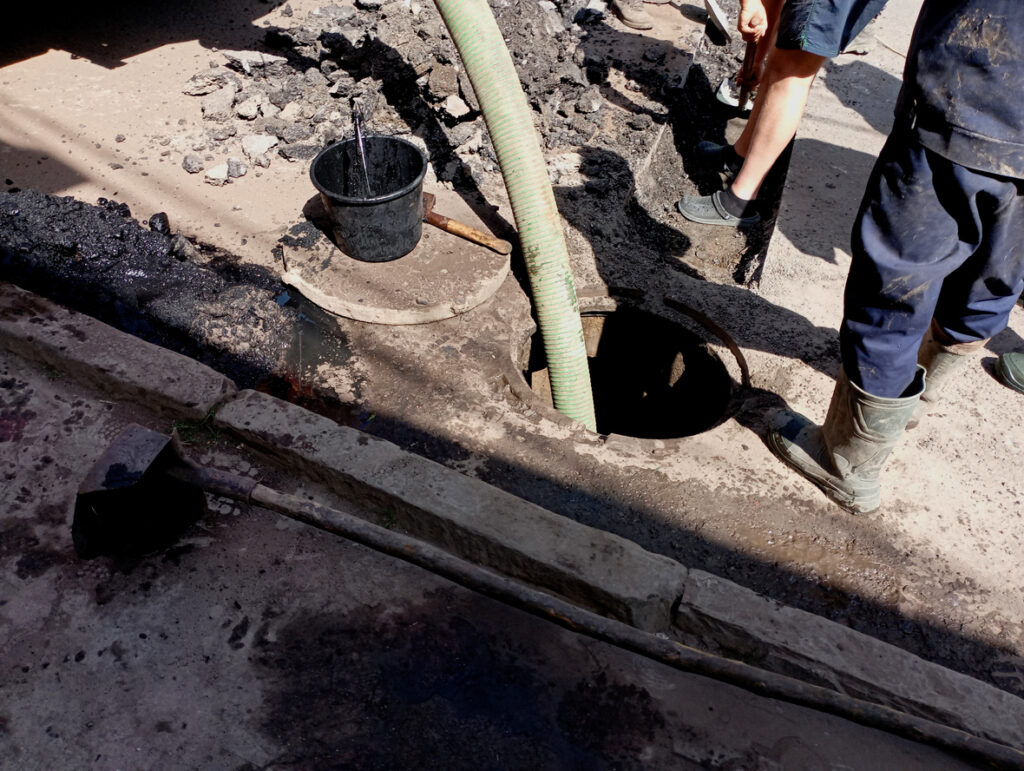
Our process removes all accumulated grease, sludge, and wastewater using vacuum extraction, scrapes interior surfaces and baffles, inspects baffle condition and flow, and produces a service record supporting your local FOG compliance file. For high-volume kitchens, we coordinate cleaning intervals based on actual output. Read our analysis of why grease trap maintenance alone does not fully protect building sewer lines to understand the full scope of what proper trap maintenance protects.
Routine Maintenance Programs
Ohio Buckeye Plumbing offers structured maintenance programs for commercial properties that want fewer plumbing emergencies and more predictable kitchen performance. Maintenance schedules are based on trap size, kitchen type, and actual weekly grease output. Service includes inspection, pumping, cleaning, baffle evaluation, and documentation that NEORSD and local health departments may require.
Grease Trap Repair
Damaged baffles, cracked housings, blocked inlet or outlet lines, and deteriorated seals all reduce grease trap effectiveness. Ohio Buckeye Plumbing inspects trap components during every service visit. For traps beyond repair, we coordinate replacement installation as part of the same service relationship. Our commercial sewer repair service addresses downstream issues when grease has already migrated past a failing trap.
Commercial Grease Trap Installation
Ohio Buckeye Plumbing installs commercial grease traps and interceptors for new construction, kitchen renovations, and system upgrades throughout Northeast Ohio. Sizing requires reviewing kitchen layout, fixture count, drainage patterns, and expected grease output. We install with service access in mind and coordinate all required permits through the appropriate local jurisdiction.
Emergency Grease Trap Service
Ohio Buckeye Plumbing provides 24/7 emergency grease trap response throughout Strongsville and Northeast Ohio. Our team arrives with vacuum extraction equipment and assesses whether overflow has affected downstream drain lines requiring commercial drain cleaning or commercial hydrojetting.
Common Grease Trap Problems We Solve
- Thick grease accumulation exceeding the 25 percent threshold, reducing trap capacity
- Persistent drain odors near sinks and floor drains between service intervals
- Slow or blocked inlet and outlet flow caused by hardened grease or scale on baffles
- Grease overflow during peak kitchen periods when output exceeds service-ready capacity
- Grease that has migrated past the trap and is coating downstream drain lines
- Damaged or missing baffles allowing grease to bypass the separation chamber
- Compliance documentation gaps for NEORSD or local health department inspections
Warning Signs Your Grease Trap Needs Service Now
- Drains at prep sinks and dish stations taking longer to clear than normal
- Foul odors near floor drains, the trap access point, or anywhere in the kitchen
- Visible grease near floor drain openings or at sink drain surfaces
- Wastewater backing up onto kitchen floors during busy service periods
- Service intervals that are consistently shorter than expected
Why Professional Grease Trap Service Protects More Than the Trap
A grease trap is the first line of defense in a chain of protection that extends from kitchen fixtures through branch drains, the main sewer lateral, and into the public sewer. When the trap is neglected, grease migrates progressively downstream, coating pipe walls and accumulating over time. NEORSD actively enforces FOG pretreatment requirements because grease blockages in public sewer lines cause combined sewer overflows affecting water quality throughout the region. Our commercial preventive plumbing maintenance program can incorporate grease trap service into a broader kitchen plumbing maintenance schedule including commercial drain cleaning and video camera sewer inspection.
Our Grease Trap Service Process
- Scheduling and Coordination: We work with your kitchen manager to schedule service at a time minimizing disruption.
- Pre-Service Assessment: Our technician reviews kitchen use, recent drainage concerns, and the last service record.
- Trap Access and Inspection: We open the trap, document current grease and solids depth, and assess baffle and housing condition.
- Complete Pumping and Extraction: All accumulated grease, sludge, and wastewater are removed using vacuum extraction.
- Interior Cleaning: Interior surfaces, baffles, and flow chambers are scraped and cleaned.
- Flow Verification: We confirm proper inlet and outlet flow and that the trap is functioning as designed.
- Service Documentation: A service record is provided documenting date, work performed, waste volume removed, and any recommendations. This supports your FOG compliance file.
Industries and Commercial Properties We Serve
- Restaurants and full-service dining establishments
- Fast-casual and quick-service food operations
- Cafes and coffee shops with food prep areas
- School, campus, and institutional cafeterias
- Hotel, hospitality, and catering kitchens
- Hospital and healthcare food service operations
- Corporate cafeterias and office building food service
- Food processing and commercial bakery facilities
Why Northeast Ohio Commercial Kitchens Choose Ohio Buckeye Plumbing
Read verified reviews on Google and HomeAdvisor before scheduling.
| What We Offer | What It Means for You |
| Licensed Under Ohio OCILB Standards | State-certified expertise on every grease trap service call |
| Fully Insured (GL + Workers Compensation) | Zero liability for you if anything goes wrong on site |
| A+ Rated BBB | Third-party verified track record for quality commercial service |
| 24/7 Emergency Grease Trap Response | We respond when your kitchen faces an urgent overflow at any hour |
| NEORSD and Ohio EPA FOG Compliance Support | Service documentation supporting your compliance program |
| Flexible Scheduling Around Kitchen Hours | We work around your operating schedule to minimize disruption |
| 20+ Years Serving Northeast Ohio Commercial Properties | Local familiarity with food service environments and regulations |
| Fully Stocked Service Vehicles | Equipment arrives ready so jobs are completed efficiently |
| 100% Satisfaction Guarantee | We stand behind every grease trap service we complete |
Ohio EPA and NEORSD FOG Requirements for Northeast Ohio Food Service Businesses
Under Ohio water pollution control laws, fats, oils, and grease are classified as pollutants that cannot be discharged into the sewer system without pretreatment. The Ohio EPA requires food service establishments that discharge FOG above regulated thresholds to install, maintain, and document their grease control devices. The Northeast Ohio Regional Sewer District maintains an active FOG pretreatment program requiring properly sized interceptors, maintenance at the 25 percent threshold, and retention of service manifests. Ohio Buckeye Plumbing provides documented service records with every cleaning that supports your compliance file. If you have received a FOG compliance notice from NEORSD or a local municipality, call (440) 283-9377 for assessment and scheduling.
FAQs About Commercial Grease Trap Service
How often should a commercial grease trap be cleaned in Northeast Ohio?
Service frequency depends on kitchen volume, menu type, and daily grease output. Ohio EPA guidelines and most Northeast Ohio municipalities follow the “25 percent rule,” which requires cleaning when the trap reaches 25 percent of its capacity. For high-volume kitchens in the Cleveland and Akron metro area that handle heavy frying or large dish volumes, that often means cleaning every 4 to 8 weeks. Lower-volume operations such as cafes may go 1 to 3 months between service intervals. Ohio Buckeye Plumbing evaluates your specific kitchen and recommends a schedule based on actual usage.
What is the 25 percent rule for grease trap cleaning?
The 25 percent rule requires a grease trap to be cleaned when the combined depth of floating grease and settled solids reaches 25 percent of the trap’s total liquid depth. This threshold is applied by many Ohio municipalities and enforced under Ohio EPA FOG pretreatment guidance. When the trap exceeds this threshold, grease overflows into downstream sewer lines, creating blockages, odors, and potential compliance violations.
What are the signs my commercial grease trap needs immediate service?
Slow drains at sinks, prep stations, or floor drains are often the first sign. Foul odors near drains or anywhere in the kitchen are another strong indicator. Visible grease or wastewater backing up at floor drains or sinks signals the trap is at or past capacity. If multiple drain points are showing symptoms simultaneously, the trap is likely overflowing into downstream piping. Ohio Buckeye Plumbing responds to emergency grease trap calls 24/7 throughout Northeast Ohio.
Are restaurants in Northeast Ohio required to maintain grease traps?
Yes. Food service establishments in Northeast Ohio that discharge to public sewer systems are subject to FOG pretreatment requirements enforced by the Northeast Ohio Regional Sewer District (NEORSD) and city utilities. Ohio EPA classifies grease as a regulated pollutant under Ohio water pollution control laws. Failure to maintain a functioning grease trap can result in inspection violations, fines, and required system upgrades.
What is FOG and why is it regulated?
FOG stands for fats, oils, and grease, the byproducts of cooking and commercial dishwashing that enter kitchen drain systems. Ohio water pollution control law classifies grease as a pollutant because it does not break down in sewer systems. When FOG accumulates in sewer lines, it hardens, reduces pipe diameter, and eventually causes blockages and combined sewer overflows. NEORSD and Ohio EPA both maintain active FOG pretreatment programs for food service establishments connected to the regional sewer system.
What happens if I let my grease trap overflow or skip service?
When a grease trap is allowed to overflow, fats and grease move past the trap into the building’s branch drain lines and main sewer lateral. Once grease coats downstream pipes, it accumulates and hardens, narrowing the drain and eventually causing blockages affecting the entire kitchen drainage system. Repeated overflow events can result in compliance violations, emergency excavation costs, and health code concerns. Our blog on why grease trap maintenance alone does not protect building sewer lines covers this progression.
What types of commercial properties need grease traps?
Any food service establishment connecting to a public sewer system and producing fats, oils, or grease is typically required to have a properly sized and maintained grease trap. This includes full-service restaurants, fast-casual dining, cafes with food prep, school and institutional cafeterias, hotel and hospitality kitchens, hospital food service, catering facilities, and food processing operations. Ohio Buckeye Plumbing serves all of these property types throughout Northeast Ohio.
Can Ohio Buckeye Plumbing install a new grease trap for a kitchen remodel or new build?
Yes. Ohio Buckeye Plumbing handles grease trap installation for new commercial kitchen construction, restaurant remodels, and kitchen expansions throughout Northeast Ohio. Proper sizing requires reviewing the kitchen layout, fixture count, drainage patterns, menu type, and expected daily grease output. We install with service access and drainage flow in mind, and coordinate with local building and sewer authorities for required permits.
What is the difference between a grease trap and a grease interceptor?
A grease trap is typically a smaller, under-sink unit installed indoors close to the fixture. A grease interceptor is a larger unit, often installed underground outside the building, designed to handle the higher FOG volumes produced by larger food service operations. Both separate grease from wastewater, but interceptors provide greater capacity for high-output kitchens. Ohio Buckeye Plumbing installs and services both types throughout Northeast Ohio.
How long does a professional grease trap cleaning service take?
A standard under-sink grease trap service typically takes 45 minutes to 90 minutes depending on trap size and buildup. Larger outdoor interceptors require 1 to 3 hours. Ohio Buckeye Plumbing works efficiently and coordinates scheduling with kitchen management to minimize disruption.
Can grease trap service be performed during kitchen operating hours?
In many cases, yes. Ohio Buckeye Plumbing works with commercial kitchen operators to schedule service at off-peak times such as before opening or after close. We communicate clearly in advance about which drain lines will be temporarily inactive and ensure the kitchen is fully operational before we leave.
What does professional grease trap pumping involve?
Professional grease trap pumping includes accessing the trap, removing all accumulated grease, sludge, and wastewater using vacuum extraction, scraping buildup from interior surfaces and baffles, inspecting the trap condition for wear or damage, and checking flow at the inlet and outlet. Ohio Buckeye Plumbing provides a service record documenting the work performed, supporting compliance with local FOG program requirements.
How do I know if my grease trap is properly sized for my kitchen?
Signs that a trap is undersized include needing service more frequently than expected, overflows during peak kitchen hours, and grease reaching downstream drain lines despite regular cleaning. Ohio Buckeye Plumbing evaluates your current system against Ohio Plumbing Code sizing requirements and your kitchen’s actual output when recommending a size upgrade.
Do school cafeterias and institutional kitchens need grease trap service?
Yes. School cafeterias, hospital food service, corporate cafeterias, and other institutional kitchens that produce FOG and connect to public sewer systems are subject to the same FOG pretreatment requirements as commercial restaurants. Ohio Buckeye Plumbing serves institutional properties throughout Northeast Ohio.
What happens to the grease waste after Ohio Buckeye Plumbing pumps it out?
Grease trap waste is transported and disposed of at approved waste handling facilities in compliance with Ohio EPA and local regulatory requirements. Ohio Buckeye Plumbing provides disposal documentation as part of the service record for commercial clients who require compliance paperwork.
Can a blocked grease trap cause sewer backups in other parts of the building?
Yes. Once grease flows past a full or neglected trap, it enters the branch drain lines and main building sewer lateral. Over time, hardened grease progressively narrows the drain and can eventually cause backups affecting floor drains, toilets, and sinks throughout the building. Our blog on why grease trap maintenance alone does not protect building sewer lines covers this progression in detail.
Does Ohio Buckeye Plumbing offer 24/7 emergency grease trap service?
Yes. Ohio Buckeye Plumbing provides emergency grease trap response 24 hours a day, 7 days a week, for commercial properties throughout Strongsville and all of Northeast Ohio. Our team arrives with equipment to pump the trap, restore drain flow, and assess whether overflow has affected downstream piping.
How do downstream drain conditions affect grease trap performance?
A grease trap performs best when downstream drain lines flow freely. If branch drains or the main sewer lateral are partially restricted by mineral scale or root intrusion, the trap’s effective capacity is reduced because wastewater cannot leave at its designed flow rate. Ohio Buckeye Plumbing offers commercial drain cleaning and video camera sewer inspection to assess the condition of downstream piping when grease trap performance is inconsistent.
What is a grease trap maintenance program?
A grease trap maintenance program is a scheduled service agreement that sets intervals based on your kitchen’s actual usage and grease output. Ohio Buckeye Plumbing offers commercial maintenance programs including regular pumping, cleaning, inspection, and compliance documentation. A structured program reduces emergency calls and protects downstream drain systems from grease migration.
Can a commercial kitchen operator clean their own grease trap?
Professional grease trap pumping requires specialized vacuum extraction equipment. Full removal of accumulated grease, sludge, and wastewater combined with baffle and flow inspection requires licensed professional service. Ohio EPA FOG compliance documentation typically requires service records from a licensed plumbing contractor.
What does NEORSD require for grease trap maintenance in Northeast Ohio?
The Northeast Ohio Regional Sewer District requires food service establishments connected to its system to install properly sized grease control devices, maintain them on a schedule preventing overflow, and retain service records. Facilities in violation may receive compliance orders, fines, or requirements to upgrade their interceptor system. Ohio Buckeye Plumbing provides service documentation supporting your compliance record.
How does the water supply in Northeast Ohio affect grease trap performance?
Medina County’s groundwater and some Northeast Ohio municipal water supplies contain elevated mineral content. Mineral scale can build up on grease trap interior surfaces over time, reducing effective capacity. Ohio Buckeye Plumbing accounts for scale accumulation during cleaning and recommends more thorough interior cleaning when scale buildup is present.
What is a grease trap manifest and do I need one?
A grease trap manifest documents the date of service, waste amount removed, and disposal facility used. Many local health departments and sewer authorities in Northeast Ohio require food service establishments to retain these records as part of FOG compliance. Ohio Buckeye Plumbing provides service documentation with each cleaning visit.
How do I prevent grease from reaching drain lines beyond the trap?
Regular cleaning at or before the 25 percent threshold is the primary measure. Staff practices also matter: using scrapers to remove grease from cookware before washing, never pouring cooking oil directly down drains, and not running hot water over greasy cookware in ways that emulsify grease into the drain water all reduce FOG load on the trap.
Why does my grease trap smell bad even after a recent cleaning?
Persistent odor after cleaning may indicate biofilm on interior surfaces that were not fully scrubbed, damaged or improperly positioned baffles, grease that has already migrated into branch drains beyond the trap, or a trap that is undersized and refilling faster than expected. Ohio Buckeye Plumbing inspects baffle condition and outlet flow during service and recommends follow-up drain cleaning if downstream migration is identified.
What are the most common causes of commercial grease trap failure?
Infrequent service allowing the trap to exceed capacity and overflow, an undersized trap that cannot handle kitchen output, damaged or missing baffles that reduce grease retention, and improper connections that bypass the trap entirely. Ohio Buckeye Plumbing inspects all these conditions during service and provides clear repair or upgrade recommendations.
Does Ohio Buckeye Plumbing service both indoor under-sink traps and large outdoor interceptors?
Yes. Ohio Buckeye Plumbing services both indoor under-sink grease traps and large outdoor interceptors. Service equipment and approach differ between the two, and our team arrives prepared for whichever system your property uses.
How does Ohio Buckeye Plumbing handle grease trap service in tight kitchen layouts?
Many Northeast Ohio commercial kitchens in older buildings have limited access to the grease trap. Ohio Buckeye Plumbing’s technicians are experienced working in constrained commercial kitchen environments and arrive with equipment appropriate for the access conditions present.
What is the difference between grease trap inspection and full cleaning?
An inspection evaluates the trap’s condition, current grease and solids depth, baffle position, and inlet and outlet flow without necessarily pumping the trap. Full cleaning includes complete vacuum extraction of all accumulated material, interior surface scraping, and baffle inspection. Full cleaning is required at or before the 25 percent threshold.
How do I schedule grease trap service with Ohio Buckeye Plumbing?
Call Ohio Buckeye Plumbing at (440) 283-9377 or submit a service request online. We serve commercial kitchens throughout Strongsville and all of Northeast Ohio including Medina, Cuyahoga, Summit, and Lorain counties. Scheduling is flexible for both routine maintenance and emergency response, and we work around your kitchen’s operating hours.
Areas We Serve for Commercial Grease Trap Service
Ohio Buckeye Plumbing provides commercial grease trap services throughout:
- Strongsville, OH – Commercial Grease Trap Service
- Akron, OH – Commercial Grease Trap Service
- Medina, OH – Commercial Grease Trap Service
- Cleveland, OH – Commercial Grease Trap Service
- Brunswick, OH – Commercial Grease Trap Service
- Barberton, OH – Commercial Grease Trap Service
- Elyria, OH – Commercial Grease Trap Service
- Berea, OH – Commercial Grease Trap Service
- Cuyahoga Falls, OH – Commercial Grease Trap Service
We serve all of Northeast Ohio including Medina County, Cuyahoga County, Summit County, and Lorain County.
Schedule Commercial Grease Trap Service in Northeast Ohio Today