


Hot Water Smells Like Rotten Eggs? Causes and When to Call a Plumber
If your hot water has a sulfur or rotten egg odor, the most likely explanation is that hydrogen sulfide gas is being produced inside your water heater tank. Three ingredients drive this reaction: sulfur compounds naturally present in water, hydrogen produced as the metal anode rod inside your tank corrodes, and sulfur-reducing bacteria that thrive in the warm, low-oxygen environment of a water heater. The result is a gas detectable by most people at trace concentrations, making even a small amount of production immediately noticeable at the tap. At household levels produced inside a residential water heater, hydrogen sulfide is not considered a health risk by the U.S. Environmental Protection Agency, but the smell is genuinely unpleasant and signals a condition inside your water heater that should be diagnosed and addressed. This guide covers all six causes, how to confirm the water heater is the source versus the supply, what you can try first, and exactly when a licensed plumber is the right call.
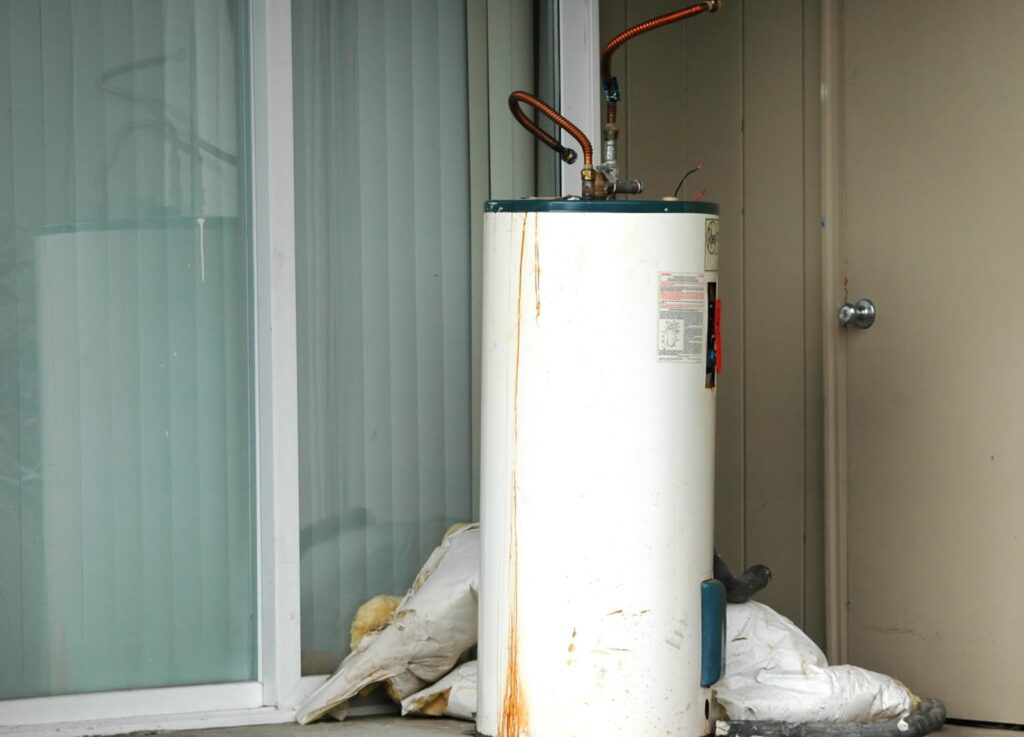
What Is the Rotten Egg Smell in Hot Water?
Hydrogen sulfide (H2S) is a colorless gas with a distinctive sulfur odor that most people describe as rotten eggs. It is produced by the interaction of three elements: sulfate or sulfur compounds carried in the water supply, hydrogen released as the metal anode rod inside the water heater corrodes, and sulfur-reducing bacteria (SRB) that consume sulfate and excrete H2S gas as a byproduct. This reaction takes place inside the tank, which is why the smell is confined to hot water and the cold water at the same tap is odor-free.
The anode rod is a metal rod, typically made of magnesium or aluminum, installed in every standard tank water heater to protect the steel liner from corrosion. Bradford White, one of the major water heater manufacturers whose products Ohio Buckeye Plumbing installs and services, explains that the magnesium anode rod generates hydrogen during its normal protective corrosion process, and that this hydrogen provides the third ingredient the bacteria need to produce H2S. Our water heater installation and repair service covers both the diagnosis of this issue and the professional solutions that resolve it permanently.
The 6 Causes of Rotten Egg Smell in Hot Water
1. Sulfur-Reducing Bacteria Reacting With Your Anode Rod
This is the primary cause in the vast majority of Northeast Ohio homes. Sulfur-reducing bacteria present in municipal and well water systems enter the water heater tank and begin consuming sulfate compounds. In the warm, low-oxygen environment of the tank, they reproduce and produce hydrogen sulfide gas as a metabolic byproduct. The magnesium anode rod accelerates this process by supplying hydrogen. The interaction of sulfur, hydrogen, and bacteria is the complete equation that produces the smell, and addressing any one of the three breaks the reaction.
2. Water Heater Temperature Set Below 120 Degrees Fahrenheit
Sulfur-reducing bacteria thrive in warm but not hot water. Water heater temperatures below approximately 120 degrees Fahrenheit create an ideal incubation environment, allowing bacterial populations to grow and produce more hydrogen sulfide. Energy-saving recommendations to lower water heater thermostat settings have contributed to the increased incidence of this problem throughout the Greater Cleveland and Akron-area residential market. If your water heater has been turned down and the smell appeared afterward, the temperature setting is a likely contributing factor.
3. Water Heater That Has Not Been Used Recently
Stagnant water inside a water heater that has not been used creates ideal conditions for bacterial multiplication. The bacteria reproduce without the dilution and turnover that comes from daily hot water use, and the hydrogen sulfide they produce concentrates inside the tank. This is a common scenario in guest bathrooms with infrequently used fixtures, in vacation properties, and in homes that have been unoccupied for a week or more. A strong smell that develops after an absence from the home often traces directly to stagnant water in the heater.
4. Water Softeners Accelerating the Reaction
Homes throughout the Greater Cleveland and Akron suburban areas that use water softeners face a higher incidence of rotten egg smell in hot water. Softened water has elevated electrical conductivity compared to unsoftened water, which accelerates the corrosion rate of magnesium anode rods. A faster-corroding rod produces more hydrogen, which feeds more bacterial H2S production. Standard anode rod replacements often provide only short-term relief in softened water environments, and a powered anode rod is frequently the more durable solution.
5. Groundwater With Elevated Sulfate Content
Medina County draws its water supply from underground aquifers managed by the Medina County Sanitary Engineers Office. Groundwater in this region naturally carries higher sulfate and mineral content than treated Lake Erie surface water. Properties on private wells anywhere in Northeast Ohio face the same dynamic, as well as water commonly contains both sulfate compounds and the bacterial species that consume them. The combination of elevated sulfate in the water and a standard magnesium anode rod inside the heater creates particularly favorable conditions for hydrogen sulfide production. Our existing blog on how hard water shortens the life of tank and tankless water heaters covers the broader impact of mineral content on water heater performance.
6. An Aging or Deteriorating Anode Rod
Anode rods have a finite service life, typically 3 to 5 years under average conditions and shorter in hard water or softened water environments. A rod that has been consumed past its effective service life may no longer protect the tank efficiently, but its degraded state and residual materials continue to provide the hydrogen that fuels bacterial H2S production. Water heaters that have not had any maintenance in five or more years, with a magnesium rod that was installed at the factory, are strong candidates for anode rod replacement. Our blog on sediment and its impact on water heater noise and performance addresses the related issue of tank maintenance and how neglected heaters develop multiple problems simultaneously.
Warning Signs That the Smell Is Coming From Your Water Heater
The single most useful diagnostic test is to run cold water from the same tap. If the cold water is completely odor-free and only the hot water smells, your water heater is confirmed as the source. Additional indicators that the heater is specifically the problem:
- The smell is strongest when hot water first runs after sitting in the tank overnight
- The odor diminishes or disappears after running the hot water continuously for several minutes
- The smell is present at multiple hot water taps throughout the house, not just one fixture
- The smell intensifies in the shower or when filling a bathtub because of the higher volume of hot water used
- The odor appeared or noticeably worsened around the same time the water heater reached 5 years or more of age
- The smell was absent for years and developed recently, especially after a period of reduced hot water use
If both hot and cold water have an odor, the source is upstream in the water supply, not the heater. Contact your water utility or schedule a water quality test.
DIY Steps to Try Before Calling a Plumber
You can take these steps to confirm the source and attempt a basic flush before scheduling a service call:
- Run the cold water diagnostic: Open a cold water tap at the same fixture and check for odor. Odor-free cold water confirms the water heater is the source.
- Flush the tank: Connect a garden hose to the drain valve at the bottom of the water heater. Open the valve and drain 5 to 10 gallons until the water runs clear. This removes loose sediment that harbors bacteria and can temporarily reduce the smell.
- Check the temperature setting: If your water heater is set below 120 degrees Fahrenheit, raise it to that level. This discourages bacterial growth without creating a scalding risk at typical plumbing setups.
- Wait and observe: Run the hot water normally for 24 to 48 hours after the flush and temperature check. If the smell is significantly reduced, a professional maintenance visit may be all that is needed.
Important: Do not raise the water heater temperature above 120 degrees Fahrenheit without a thermostatic mixing valve installed at your fixtures. Temperatures above 120 degrees at the tap create a scalding risk, particularly for children and elderly household members. A licensed plumber can install the valve and adjust the temperature safely.
When Professional Plumbing Service Is the Right Call
Call Ohio Buckeye Plumbing when:
- The smell persists for more than 2 to 3 days after a DIY tank flush
- The smell returns within a few weeks of each DIY flush
- The water heater is 5 or more years old and has received no professional maintenance or anode rod inspection
- You have a water softener and have tried multiple solutions without lasting results
- The water heater is 10 years old or older and the smell is a new development
- You want to permanently resolve the problem rather than manage recurring odor with temporary measures
Our general plumbing inspection service includes a full evaluation of your water heater condition, anode rod status, and surrounding supply line health as part of a comprehensive home plumbing assessment.
Solutions That Actually Eliminate the Rotten Egg Smell in Hot Water
Professional Tank Flush and Shock Disinfection
A licensed plumber fully drains the water heater tank, introduces a diluted disinfectant solution such as food-grade hydrogen peroxide, allows it to contact all internal surfaces, and then flushes the tank completely. This kills the sulfur-reducing bacteria responsible for H2S production and removes the sediment in which they colonize. A professional flush reaches all interior surfaces more effectively than a homeowner drain-valve flush and is the foundation of any water heater odor treatment.
Anode Rod Replacement
After flushing and disinfecting the tank, the existing magnesium or aluminum anode rod is replaced with an aluminum-zinc alloy rod. The zinc disrupts the chemical reaction that produces hydrogen sulfide, providing a significantly lower-odor alternative to the standard magnesium rod. For homes with water softeners, a powered anode rod, which uses a low-voltage electrical current to protect the tank without any corrosion chemistry, is the most reliable long-term solution. Anode rod replacement requires specialty tools and is not practical as a DIY repair for most homeowners.
Temperature Adjustment With a Thermostatic Mixing Valve
Raising the water heater temperature to 130 to 140 degrees Fahrenheit kills sulfur-reducing bacteria and can eliminate the smell as part of a combined treatment. A thermostatic mixing valve is installed at the point of use to blend the hot water with cold water before it reaches the tap, maintaining a safe output temperature while allowing the tank to operate at bacteria-killing temperatures. Ohio Buckeye Plumbing installs both the mixing valve and the temperature adjustment in a single service visit.
Water Heater Replacement
When the water heater is 10 years old or more, has visible corrosion, produces sediment in the water, or where ongoing treatment costs approach the cost of a new system, replacement is often the most practical and permanent path. Ohio Buckeye Plumbing installs leading brands including Rheem, Bradford White, AO Smith, Rinnai, and Navien for both tank and tankless configurations. A new system starts with a fresh tank, a factory-installed anode rod in good condition, and none of the bacterial history built up in the old unit. Learn more about our full range of water heater installation and repair options for Northeast Ohio homeowners.
Why Northeast Ohio Homeowners Experience This Issue More Often
Homeowners in communities served by Medina County’s groundwater aquifer system, including Wadsworth, Medina, and surrounding areas, are more likely to encounter hydrogen sulfide odor in hot water than homeowners served by treated Lake Erie surface water. Groundwater naturally carries higher sulfate concentrations, which directly feeds the bacterial reaction inside the water heater tank. The Medina County Sanitary Engineers Office manages this regional water system, and its distribution includes elevated mineral content compared to municipal surface water systems.
Homes with water softeners throughout the suburban corridors from Strongsville and Brunswick to Westlake and North Ridgeville face accelerated anode rod consumption and may need more frequent professional service to prevent the smell from establishing. Private well users anywhere in Northeast Ohio face the highest risk because well water naturally contains both the sulfate compounds and the bacteria that interact with the anode rod. If your home has a private well, a water quality test in addition to water heater service is a worthwhile step.
FAQs About Rotten Egg Smell in Hot Water
Is hydrogen sulfide in hot water from a water heater dangerous?
At the trace concentrations produced inside a residential water heater, hydrogen sulfide in hot water is not considered a health risk by the EPA. The smell is unpleasant and signals a problem that should be addressed, but it does not represent an immediate health hazard at the levels present in household hot water. If the smell is overwhelming, present throughout the house, or also affects cold water, contact your water utility to investigate the supply.
Why does only my hot water smell like rotten eggs and not the cold water?
When only the hot water has a sulfur or rotten egg odor, the reaction is happening inside the water heater tank itself. The bacteria and anode rod interaction that produces hydrogen sulfide gas occurs in the warm, oxygen-depleted environment of the tank. Cold water bypasses the heater entirely, so it carries no H2S. If both hot and cold water at the same tap have an odor, the source is upstream in the water supply rather than in the heater.
What exactly is an anode rod and why does it cause the rotten egg smell?
An anode rod is a metal rod, typically made of magnesium or aluminum, installed inside the water heater tank to protect the steel liner from corrosion. It works by corroding itself instead of the tank. When sulfur-reducing bacteria present in water interact with the hydrogen released during the anode rod’s corrosion process, they produce hydrogen sulfide gas as a byproduct. Replacing the magnesium anode rod with an aluminum-zinc alloy rod, or with a powered anode rod that uses electrical current instead of corrosion, eliminates the chemical reaction that produces the smell.
Does having a water softener make the rotten egg smell in hot water worse?
Yes. Softened water has higher electrical conductivity than unsoftened water, which accelerates the corrosion of magnesium anode rods. The faster the rod corrodes, the more hydrogen is released to feed the bacterial reaction that produces hydrogen sulfide. Homeowners with water softeners throughout the Greater Cleveland and Akron areas often find that standard anode rod replacements provide only temporary relief and that a powered anode rod is necessary for a lasting solution.
Can I drink or cook with hot water that smells like rotten eggs?
At household concentrations produced by a residential water heater, the EPA does not classify hydrogen sulfide from an anode rod reaction as a health risk. However, the taste and odor make cooking and drinking highly unpleasant, and the underlying bacterial presence in the tank is worth resolving. Once the water heater has been serviced, flushed, and the anode rod addressed, the water quality issue is corrected. If you have any concern about the safety of your specific water supply, your local water utility or a licensed plumber can advise on water testing.
Will the rotten egg smell in my hot water go away on its own if I ignore it?
No. The conditions inside the water heater that produce hydrogen sulfide gas do not resolve without intervention. The bacteria responsible for the smell can become increasingly established in the tank sediment and in the biofilm on the anode rod over time, and the smell typically worsens rather than improves as months pass. A water heater that has had a persistent rotten egg odor for more than a few months will likely need a professional flush, anode rod replacement, or shock disinfection to resolve the problem effectively.
How do I confirm whether the smell is from my water heater or from the water supply?
Run cold water at the same tap where the hot water smells. If the cold water is odor-free, your water heater is confirmed as the source. If the cold water also has a sulfur or rotten egg odor, the issue is in the water supply reaching your home, not in the heater itself. You can also check a cold-only tap elsewhere in the house. If no cold water in the home has an odor, the water heater is definitively the source.
How long does it take for the rotten egg smell to go away after a professional service?
After a professional tank flush, shock disinfection, and anode rod replacement, most homeowners notice a significant reduction or complete elimination of the smell within 24 to 48 hours. In some cases, particularly when the bacterial colonization was established over a long period, it may take two to three days of normal water usage to fully flush the treated water through all the hot water lines in the house.
Can a tankless water heater also produce a rotten egg smell in the hot water?
Yes, though less commonly than tank heaters. Tankless water heaters do not use anode rods, so the primary cause of hot water odor in a tank heater does not apply. However, if scale builds up inside the heat exchanger over time in hard water areas, bacteria can colonize that scale and produce hydrogen sulfide. The fix for a tankless heater with an odor problem is a professional descaling service. Ohio Buckeye Plumbing services both tank and tankless water heaters throughout Northeast Ohio.
How often should an anode rod be replaced to prevent the rotten egg smell?
Anode rods in standard tank water heaters should be inspected every 3 to 5 years under average conditions, and more frequently in homes with water softeners or high mineral content groundwater. A rod that has been fully consumed can no longer protect the tank and may contribute to bacterial odor through its degradation products. Ohio Buckeye Plumbing inspects anode rod condition during water heater service calls and advises replacement when the rod has been consumed to less than half its original diameter.
Does raising the water heater temperature permanently fix the rotten egg smell?
Raising the water heater temperature to 130 to 140 degrees Fahrenheit kills sulfur-reducing bacteria and can eliminate the smell, but it is not effective alone without also addressing the anode rod condition. If the same magnesium rod remains in place, bacteria can re-establish after the temperature is lowered back to normal operating range. Temperature adjustment is most effective as part of a combined approach that includes a professional flush, disinfection, and anode rod replacement. At temperatures above 120 degrees Fahrenheit, a thermostatic mixing valve at the fixtures is needed to prevent scalding.
Does hard water in Northeast Ohio make the rotten egg smell more likely?
Yes. Medina County draws its water supply from underground aquifers that carry higher natural mineral and sulfate content than Lake Erie surface water. Higher sulfate levels in the water supply directly feed the bacterial reaction that produces hydrogen sulfide inside the water heater tank. Northeast Ohio homes, particularly those in Medina County, Cuyahoga County communities served by groundwater wells, and properties with private well systems, are more susceptible to rotten egg odor in hot water than homes served by treated Lake Erie surface water.
Can I flush my water heater myself to fix the rotten egg smell?
You can try flushing several gallons from the drain valve at the bottom of the water heater as a first DIY step. Connect a garden hose to the drain valve, open it, and let 5 to 10 gallons flow until the water runs clear. This removes loose sediment and can reduce the smell temporarily. However, a DIY flush typically does not address the anode rod condition or perform the shock disinfection that a professional service includes. If the smell returns within a few weeks of a DIY flush, professional service is the appropriate next step.
Is replacing the water heater the only permanent solution for persistent rotten egg smell?
Not necessarily. For most water heaters, replacing the anode rod with an aluminum-zinc alloy rod or a powered anode rod, combined with a professional flush and shock disinfection, permanently resolves the smell. Water heater replacement becomes the right recommendation when the unit is 10 years old or more, has visible corrosion, produces sediment in the water, or where the combination of repair costs makes a new system more economical. Ohio Buckeye Plumbing will always present repair options honestly before recommending replacement.
How do I get Ohio Buckeye Plumbing to diagnose my rotten egg hot water smell?
Call Ohio Buckeye Plumbing at (440) 283-9377 or submit a service request online. Our licensed plumbers serve all of Northeast Ohio, including Greater Cleveland, Medina County, Akron, and surrounding communities. We arrive with a fully stocked service truck, diagnose whether the issue is the anode rod, bacterial contamination, sediment, or the overall condition of the water heater, and give you upfront pricing before any work begins. We are available 24/7 and back every water heater service with a 100% satisfaction guarantee.
When to Call Ohio Buckeye Plumbing About Your Hot Water
Ohio Buckeye Plumbing’s licensed, insured plumbing technicians diagnose and resolve rotten egg odor in hot water throughout Greater Cleveland, Medina County, Akron, and the entire Northeast Ohio service area. We arrive with fully stocked service trucks, perform a proper diagnosis to identify whether the issue is the anode rod, bacterial contamination, sediment accumulation, or the overall condition of the water heater, and present clear, upfront pricing options before any work begins. We have served Northeast Ohio homeowners for over 20 years, carry both general liability and workers’ compensation insurance, and hold an A+ BBB accreditation. Read what customers say in our verified Google reviews and on Angi before calling. We are available 24/7 and back every water heater service with a 100% satisfaction guarantee.
Schedule Your Water Heater Service in Northeast Ohio Today
Ohio Buckeye Plumbing is licensed in compliance with Ohio OCILB standards, fully insured, and BBB-accredited, with over 20 years of water heater service experience throughout Northeast Ohio. If your hot water smells like rotten eggs, the underlying condition in your tank will not resolve on its own. Call (440) 283-9377 today for a free consultation and upfront pricing on a professional diagnosis, anode rod service, or water heater replacement. We serve all of Greater Cleveland, Medina County, Akron, and surrounding communities. Emergency service is available around the clock.