


Buying Commercial Property in Ohio? Schedule a Sewer Camera Inspection First
A standard commercial property inspection in Ohio documents what an inspector can see above ground. It does not include the underground sewer lateral connecting the building to the public sewer main, the condition of the interior drain system, or whether decades of grease accumulation, root intrusion, or pipe deterioration have compromised the drainage infrastructure beneath the property. Hidden sewer damage is one of the most expensive post-purchase surprises in commercial real estate, and the responsibility for it transfers entirely to the buyer at closing. Scheduling a video camera sewer inspection during the due diligence period gives buyers documented evidence of pipe condition, grounds for price negotiation when damage is found, and the ability to make an informed decision before the transaction closes. Ohio Buckeye Plumbing is licensed by the Ohio Construction Industry Licensing Board (OCILB), carries full general liability and workers’ compensation insurance, and holds an A+ accreditation with the Better Business Bureau. Our commercial video camera sewer inspection service serves commercial buyers, investors, and real estate professionals throughout Northeast Ohio. Read verified reviews on Google, Angi, and HomeAdvisor. Call (440) 283-9377 to schedule a commercial pre-purchase inspection.
What a Standard Commercial Property Inspection Misses
Commercial property inspections performed by licensed building inspectors are comprehensive assessments of the accessible, visible elements of the property: structural condition, roof, HVAC systems, electrical panels, plumbing fixtures, and interior finishes. They are not designed to assess underground infrastructure. The sewer lateral, which is the pipe running from the building’s plumbing system to the public sewer main in the street, is underground and not accessible without camera equipment. In most Ohio commercial real estate transactions, the sewer lateral condition is simply unknown at the time of closing unless the buyer specifically arranges a camera inspection.
This gap matters significantly for older commercial properties in Northeast Ohio. A building constructed in the 1960s, 1970s, or 1980s has a sewer lateral that is now 40 to 60 years old. In that time period, the lateral has experienced Northeast Ohio’s repeated freeze-thaw cycling, root pressure from maturing trees planted above the lateral route, and gradual soil settlement. The pipe material, whether clay tile or early cast iron, has a finite service life that is often exceeded in this age range without the building owner ever knowing because the pipe continues to function at reduced capacity until a backup or failure forces the issue. Our blog on how video camera inspections prevent unnecessary excavation explains how pre-service camera inspection changes the repair decision-making process for all types of commercial drain and sewer work.
What a Commercial Sewer Camera Inspection Reveals
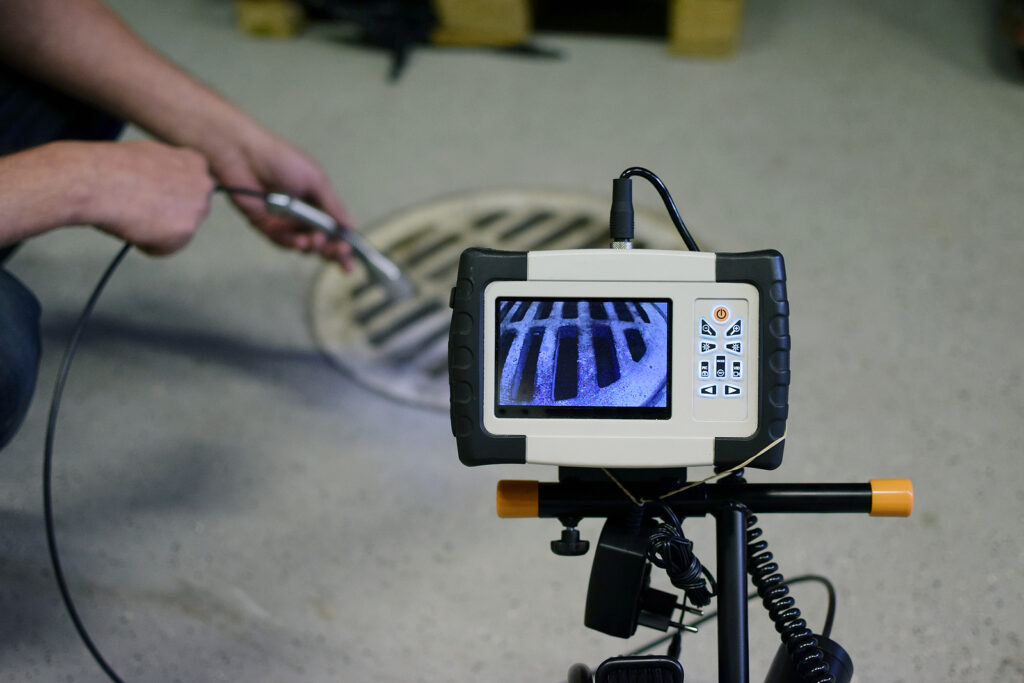
Ohio Buckeye Plumbing’s commercial video camera sewer inspection inserts a waterproof camera into the sewer lateral through a cleanout or access point and transmits live video of the pipe interior. For commercial pre-purchase inspections, we document every finding with still images and a written report. Common findings in Northeast Ohio commercial property inspections include:
Root Intrusion
Tree roots enter sewer laterals through joint gaps, cracks, and corrosion holes. In older commercial buildings with clay tile laterals, root intrusion is one of the most common camera findings. Root masses inside the pipe trap grease and debris from building operations, progressively narrowing the effective pipe interior until backups occur during peak use. Our blog on tree roots in commercial sewer lines covers how root intrusion progresses from early thread entry to structural pipe damage, and what repair options apply at each stage.
Pipe Belly and Sag
A pipe belly is a settled low point in the sewer lateral where debris, grease, and standing water pool because the pipe has sagged below its designed slope. Soil settlement from fill material used in site preparation, years of soil compaction, or underground water movement can cause sections of the lateral to sag over time. The camera identifies bellied sections as consistent low points in the pipe that collect debris. A pipe belly cannot be cleaned away; it requires structural repair of the affected section.
Joint Separation and Infiltration
In clay tile laterals with deteriorating mortar joints, the camera reveals gaps at joint locations where pipe sections have separated. These gaps allow groundwater to enter the sanitary sewer system (infiltration), contributing to the inflow and infiltration challenges documented by the Northeast Ohio Regional Sewer District (NEORSD) throughout Cuyahoga County. Open joints also allow ongoing root entry and can widen progressively from soil movement.
Grease Accumulation From Prior Food Service Use
Commercial properties that previously housed restaurants, cafeterias, or food service operations often have significant FOG buildup inside the branch drain pipes even if the grease trap itself has been maintained. FOG coats the interior walls of cast iron and clay tile branch pipes in layers that accumulate over years of kitchen operation. A new buyer who is not aware of this condition may inherit drain lines that require professional hydrojetting to restore adequate flow capacity before the property can support new commercial operations at full capacity.
Structural Damage and Pipe Collapse
In the most severe cases, camera inspection reveals sections of the lateral that have structurally collapsed, crushed from soil loading, or offset so severely that the pipe no longer carries flow. A structurally failed lateral section requires targeted excavation and pipe replacement before the building can be occupied for normal commercial use. Discovering this condition before closing gives the buyer the option to negotiate repair into the terms of the transaction rather than inheriting the full repair cost at their expense after closing. Ohio Buckeye Plumbing’s commercial sewer repair service covers all repair options from trenchless relining to targeted excavation.
When to Schedule the Inspection During the Due Diligence Process
A commercial sewer camera inspection should be scheduled as early as possible in the due diligence period following execution of the purchase agreement. Most Ohio commercial purchase agreements include an inspection contingency period during which the buyer may conduct physical due diligence and, if material conditions are discovered, negotiate a price adjustment, request seller repairs, or exit the transaction without forfeiting earnest money. The sewer inspection must be completed, reported, and acted upon before this contingency period expires.
Ohio Buckeye Plumbing works directly with buyers, real estate attorneys, and commercial brokers to schedule camera inspections promptly after a purchase agreement is executed. We coordinate access with the seller or property manager, conduct the inspection, and provide the written report and footage in time to support due diligence decisions within the contingency period timeline.
What Happens When the Inspection Finds Damage
Pre-purchase camera findings create documented grounds for negotiation. When the inspection reveals significant damage, buyers have several options:
- Price reduction: Use the written inspection report and repair estimate to negotiate a reduction in the purchase price equal to or greater than the cost of needed repairs.
- Seller repair requirement: Make the seller’s completion of documented repairs a condition of closing, confirmed by a re-inspection of the repaired lateral before the closing date.
- Escrow holdback: Establish an escrow account funded from sale proceeds to cover documented repair costs, with funds released to the buyer after the repair is completed post-closing.
- Inspection contingency exit: In cases where the damage is severe enough that the repair cost materially changes the investment thesis for the property, use the inspection contingency to exit the transaction without penalty.
In all of these scenarios, the buyer’s leverage depends entirely on the documentary evidence provided by the camera inspection and written report. A verbal concern about pipe age carries no weight in negotiation. A written report with still images and a licensed contractor’s repair estimate does.
Ohio EPA and NEORSD Compliance Considerations for Commercial Properties
Commercial properties in Ohio are subject to sewer discharge regulations administered by the Ohio EPA and local sewer authorities. Properties with prior food service use may have FOG pretreatment obligations under the NEORSD’s FOG pretreatment program for Cuyahoga County. Buyers of commercial properties that previously housed food service operations should confirm whether grease trap systems are properly sized, maintained, and compliant with the applicable sewer authority’s requirements, since inherited non-compliance creates ongoing liability. Commercial properties in NEORSD’s service area that require industrial pretreatment permits should verify permit status during due diligence through direct inquiry with NEORSD. A camera inspection of the drainage system, combined with a review of grease trap condition, provides a complete picture of the drainage compliance posture of the property before the buyer assumes responsibility for it.
Why Commercial Buyers in Northeast Ohio Choose Ohio Buckeye Plumbing
Verified reviews on Google, Angi, and HomeAdvisor
| What We Offer | What It Means for You |
| Licensed by Ohio OCILB | State-certified expertise on every residential and commercial job |
| Fully Insured: GL + Workers Compensation | Zero liability on your property if anything goes wrong on-site |
| BBB Accredited, A+ Rating | Third-party verified track record of customer satisfaction |
| 24/7 Emergency Service | We respond at any hour for backups, burst pipes, and urgent plumbing concerns |
| 20+ Years Serving Northeast Ohio | Deep local knowledge of NE Ohio infrastructure and conditions |
| Family-Owned Local Business | You are treated like a neighbor, not a service ticket |
| Upfront Pricing Before Any Work Begins | No surprise charges on your invoice |
| 100% Satisfaction Guarantee | We stand behind every repair and service we perform |
Frequently Asked Questions About Commercial Sewer Inspection Before Buying Ohio Property
Should I get a sewer camera inspection before buying a commercial property in Ohio?
Yes, and it should be a standard part of every commercial real estate due diligence process in Ohio. A commercial sewer camera inspection reveals the interior condition of the sewer lateral and underground drain lines, identifying root intrusion, pipe belly, joint separation, grease accumulation from prior food service use, and structural damage that no surface-level inspection can detect. Hidden sewer damage is one of the most expensive post-purchase surprises in commercial real estate because the cost of commercial lateral repair or replacement can reach tens of thousands of dollars, and the responsibility transfers to the buyer at closing. Knowing the pipe condition before you close gives you the leverage to negotiate the sale price, require seller repairs, or establish an escrow holdback for documented damage.
What does a commercial sewer camera inspection reveal that a standard inspection does not?
A standard commercial building inspection performed by a property inspector covers the visible structure, mechanical systems, roof, and accessible interior components. It does not include the underground sewer lateral connecting the building to the public sewer main, the condition of the interior drain lines, or the underground drainage infrastructure. A video camera sewer inspection specifically reveals the interior condition of the sewer lateral: root intrusion from mature trees growing above older pipe, pipe belly or sag from soil settlement that creates a permanent low point where debris and grease pool, joint separation that allows groundwater infiltration, grease accumulation inside the branch pipes from prior food service operations, structural cracks and pipe collapse, and the pipe material itself, which determines how many remaining years of useful life the system realistically has.
How is a pre-purchase sewer inspection different from a standard commercial building inspection?
A standard commercial property inspection is performed visually by a building inspector who documents the condition of accessible systems and structures. The sewer lateral and underground drainage system are explicitly outside the scope of most standard commercial inspections because they are underground and not visible without specialized equipment. A pre-purchase sewer camera inspection is performed by a licensed plumbing contractor using a waterproof video camera that is inserted into the sewer lateral through a cleanout or access point and transmits live video of the pipe interior. The camera records what is inside the pipe in real time, identifying conditions that have no visible surface symptom until they cause a backup or require emergency repair.
Who pays for the sewer camera inspection in a commercial real estate transaction in Ohio?
In most Ohio commercial real estate transactions, the buyer pays for and arranges the pre-purchase sewer inspection as part of their due diligence cost. The inspection is typically scheduled during the due diligence period following the execution of the purchase agreement, before the inspection contingency expires. If the inspection reveals significant damage, the buyer uses the findings to request a price reduction, a seller credit, or a repair requirement before closing. Some buyers include a sewer inspection contingency specifically in their purchase offer. The cost of the pre-purchase inspection is modest compared to the potential cost of repairing unknown sewer damage after closing, when the responsibility is entirely the new owner’s.
What types of sewer damage are most common in older Ohio commercial buildings?
The most common sewer conditions Ohio Buckeye Plumbing finds during pre-purchase commercial sewer inspections in Northeast Ohio include: root intrusion through clay tile or early cast iron sewer laterals in buildings constructed before the 1980s, pipe belly from soil settlement in buildings where the original grade has shifted or where fill material was used during site preparation, grease wall coating and FOG accumulation in the branch drain pipes of properties that previously housed food service operations, joint separation in clay tile pipe where mortar has deteriorated after 40 to 60 years, and offset joints from soil movement in older neighborhoods with freeze-thaw cycling effects on buried infrastructure.
How long does a commercial sewer camera inspection typically take?
The time for a commercial sewer camera inspection depends on the building size, the length of the lateral, the number of branch drain lines being inspected, and the accessibility of cleanout points. A standard commercial lateral inspection of a single-use building typically takes 1 to 2 hours from equipment setup to written report. A larger property with multiple cleanout access points, a longer lateral, or a need to inspect branch lines from the kitchen, restrooms, and floor drains separately may take 3 to 4 hours. Ohio Buckeye Plumbing provides a time estimate before service begins. Most commercial buyers schedule the inspection during the due diligence period before the inspection contingency expires.
What areas of the drainage system does a camera inspection cover?
A standard commercial sewer camera inspection covers the main sewer lateral from a cleanout access point to the public sewer connection, which is the most critical segment for identifying structural damage and root intrusion. Depending on cleanout access and the buyer’s scope request, the inspection can also cover the branch drain lines connecting individual areas of the building such as restrooms, kitchen drains, floor drains, and laundry connections to the main lateral. Ohio Buckeye Plumbing discusses the inspection scope with the buyer or buyer’s representative before scheduling to ensure the areas of highest concern are included in the camera run.
What happens if the inspection finds significant sewer damage before closing?
When camera footage reveals significant damage, the buyer has several options depending on the severity of the finding and the terms of the purchase agreement. A price reduction negotiation uses the documented repair estimate as the basis for requesting a lower purchase price. A seller repair requirement may be incorporated as a condition of closing, requiring the seller to contract and complete the repair before the closing date. A repair escrow or credit establishes a holdback amount from the sale proceeds to fund the documented repair after closing. In severe cases where the lateral has collapsed or multiple sections require full replacement, the buyer may choose to exercise an inspection contingency and exit the transaction. Documented camera findings give the buyer leverage that verbal reports or assumptions about pipe age do not.
Can pre-purchase sewer inspection findings be used to negotiate the sale price of the property?
Yes, and this is one of the primary practical reasons to schedule a pre-purchase camera inspection. Camera footage provides objective, visual documentation of the pipe condition that can be shared with the seller, the seller’s broker, and the buyer’s real estate attorney. A written report from a licensed plumbing contractor describing the specific damage found and the scope of recommended repair gives the buyer factual grounds for negotiating a price reduction or seller credit. The negotiation is based on documented evidence rather than subjective concern, which makes it significantly more likely to result in a favorable outcome for the buyer.
Do commercial properties in Ohio have specific sewer compliance requirements?
Yes. Commercial properties in Ohio, particularly food service establishments, are subject to FOG pretreatment requirements administered by the Northeast Ohio Regional Sewer District (NEORSD) in Cuyahoga County and by local sewer authorities in other Northeast Ohio communities. The Ohio EPA sets the regulatory framework for industrial pretreatment, cross-connection control, and commercial discharge standards. Properties that previously housed food service operations may have grease trap systems that are out of compliance, drain lines that carry significant FOG accumulation, and sewer connections that require review by the applicable sewer authority before change of use or renovation. Camera inspection findings inform what compliance steps may be required after purchase.
How old is too old for a commercial sewer lateral in Northeast Ohio?
Clay tile sewer laterals installed in commercial properties in the 1950s through 1970s are now 50 to 70 years old, beyond the typical expected service life for this pipe material. Cast iron laterals from the same period have also reached the point where corrosion and joint deterioration are common findings. A camera inspection of a clay tile lateral in this age range in Northeast Ohio typically shows some degree of root intrusion, mortar joint deterioration, and pipe belly. The question is not whether damage is present but how severe it is and what repair approach is most appropriate. Trenchless relining, which installs a new structural liner inside the existing pipe without excavation, extends the service life of a lateral that retains enough structural integrity to support the liner.
What should I look for in the report from a commercial sewer camera inspection?
A complete camera inspection report should include written documentation of the pipe material inspected, the total length of lateral inspected, the location and type of each defect found, still image captures of significant conditions, and the inspector’s recommendation for each finding. Defect types are typically characterized by severity, such as minor joint deterioration that warrants monitoring vs. root intrusion that requires immediate removal vs. a collapsed section that requires pipe repair before the property can be safely used. Ohio Buckeye Plumbing provides a written report and camera footage after every commercial inspection so the buyer has documentation that supports both due diligence decisions and post-closing repair planning.
Is a sewer camera inspection required for commercial property purchase in Ohio?
No state law requires a sewer camera inspection as a mandatory part of commercial real estate transactions in Ohio. However, commercial lenders, commercial real estate attorneys, and experienced commercial buyers increasingly include it as standard practice in due diligence, particularly for older properties, properties with prior food service use, and properties where the sewer lateral age is unknown. The absence of a pre-purchase inspection does not create liability for the seller in most cases, meaning the cost of undisclosed sewer damage discovered after closing falls entirely on the buyer. The inspection is recommended as a protective measure for the buyer, not a legal requirement.
Does Ohio Buckeye Plumbing provide pre-purchase commercial sewer camera inspections?
Yes. Ohio Buckeye Plumbing performs pre-purchase commercial sewer camera inspections for buyers, commercial real estate investors, brokers, and attorneys throughout Northeast Ohio. Our inspections include the full camera run, live footage for the buyer’s review, and a written report with still images of significant findings. We coordinate scheduling with the seller and the seller’s representative to arrange access to the property during the due diligence period. Call (440) 283-9377 to schedule a commercial pre-purchase sewer inspection throughout Northeast Ohio.
How do I schedule a pre-purchase commercial sewer inspection in Northeast Ohio?
Call Ohio Buckeye Plumbing at (440) 283-9377 or submit a request online at ohiobuckeyeplumbing.com. We serve commercial buyers and brokers throughout Strongsville, Brunswick, Medina, Akron, Broadview Heights, Twinsburg, and all of Northeast Ohio. Commercial pre-purchase inspections are typically scheduled within 2 to 5 business days, and we work around the due diligence timeline of the purchase agreement. We are BBB-accredited with an A+ rating, licensed through Ohio OCILB, and provide complete written inspection documentation after every commercial camera inspection.
When to Schedule Your Pre-Purchase Commercial Sewer Camera Inspection
Ohio Buckeye Plumbing’s commercial inspection team performs pre-purchase video camera sewer inspections for commercial buyers, investors, and real estate professionals throughout Strongsville, Brunswick, Medina, Akron, Broadview Heights, Twinsburg, and all of Northeast Ohio. We are licensed through the Ohio Construction Industry Licensing Board, carry full insurance, and hold an A+ BBB accreditation. Our commercial inspection program includes camera run, live footage review, written report, and still images of all significant findings. For commercial properties requiring follow-up service after inspection, we provide commercial sewer repair, commercial hydrojetting, and commercial preventive maintenance programs as part of a comprehensive commercial plumbing service relationship.
Schedule Your Commercial Pre-Purchase Sewer Inspection in Northeast Ohio
Ohio Buckeye Plumbing is BBB-accredited with an A+ rating, licensed through Ohio OCILB, and fully insured for every commercial inspection and repair throughout Northeast Ohio. Do not let the sewer lateral be the undisclosed liability in your next commercial property acquisition. Call (440) 283-9377 today to schedule your commercial pre-purchase sewer camera inspection. We coordinate with sellers and brokers to fit within your due diligence timeline, provide complete written documentation, and back every inspection with professional service and a 100% satisfaction guarantee.