


Foaming Root Killer vs. Rock Salt and Copper Sulfate: What Works in a Sewer Line?
Of the three, a foaming root killer used exactly as its label directs is the only chemical option the City of Cleveland’s Urban Forestry memo recommends. The same memo says not to use rock salt or copper sulphate because both have been shown to be problematic in streams and sewers. None of the three repairs the crack or loose joint that let roots in, which is why roots return when the pipe itself is not fixed. Ohio Buckeye Plumbing is licensed through the Ohio Construction Industry Licensing Board (OCILB), fully insured, and holds an A+ accreditation with the Better Business Bureau, with verified reviews on Google, Angi, and HomeAdvisor. Our Roots Be Gone service starts with a camera inspection to find where roots enter, clears the line, and treats it so growth is slowed. Call (440) 283-9377 if your drains are slow or backing up and you suspect roots.
The short version:
- Foaming root killer: fills the pipe so it touches roots on every surface, delays regrowth, and should be used only as the label directs.
- Rock salt: dissolves and flushes away, and Cleveland’s memo says not to use it.
- Copper sulfate: EPA-registered labels warn that it is toxic to fish and aquatic organisms, and Cleveland’s memo says not to use it.
- Mechanical clearing removes the root mass, and a camera inspection shows why the roots got in.
- Repair or lining fixes the cause. Removing the tree does not fix a cracked pipe.
How Tree Roots Get Into a Sewer Line
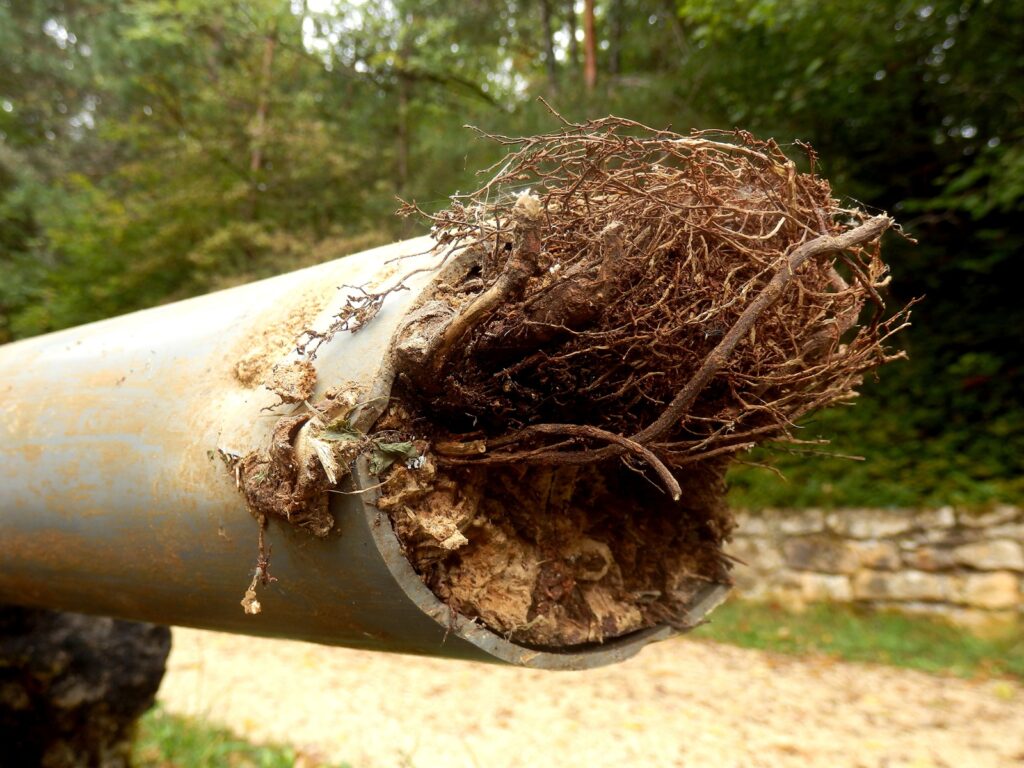
Sewer pipes do not attract roots on their own. Roots follow moisture. The City of Cleveland’s Urban Forestry memo explains that tree roots are attracted to the water and oxygen leaving a pipe, so they find their way in through existing cracks, loose joints, and other defects. Once inside, roots grow into dense masses that slow flow and catch grease and debris, and the blockage keeps growing as long as the opening stays.
That is why a root problem is rarely just a clog. It is usually a sign that the pipe has a defect, and the right treatment depends on how big the defect is, what the pipe is made of, and how much root has already formed.
Foaming Root Killer vs. Rock Salt vs. Copper Sulfate: What Each Does
Rock Salt
Rock salt is the remedy most people try first, usually flushed down a toilet. Salt dissolves and travels with the water instead of staying in contact with roots, so it tends to pass through the problem area quickly. The City of Cleveland memo is direct: “Do not use rock salt or copper sulphate as it has been shown to be problematic in streams and sewers.” Salt also does nothing about the opening in the pipe.
Copper Sulfate
Copper sulfate crystals are sold as root killer and are usually poured into a toilet. The crystals are heavier than water and settle at the bottom of the pipe, while roots tend to hang from joints along the top and sides, so contact with the roots that matter is limited.
The bigger issue is the label. An EPA-registered copper sulfate root killer label (EPA Reg. No. 829-210) states that the pesticide is toxic to fish and aquatic organisms, tells users not to discharge effluent containing the product to sewer systems without notifying the sewage treatment plant authority, and says not to use it in sewer systems with septic tanks, cesspools, or lagoons. Those are the kinds of concerns behind Cleveland’s advice to avoid it.
Foaming Root Killer
A foaming root killer is a herbicide formulated as a foam. Applied through a cleanout, toilet, or manhole depending on the product and the line, the foam expands to fill the pipe so it touches roots on the top and sides, where liquids and crystals do not reach. Cleveland’s memo says residents can use one and adds: “Follow the manufacturer’s label instructions and use the appropriate amount for the application.”
Foaming root killers are registered pesticides, and EPA’s pesticide label guidance tells consumers to always read the label first because it sets the conditions, directions, and precautions for use. Manufacturer materials describe the foam killing roots on contact and delaying regrowth rather than preventing it. One municipal-scale manufacturer fact sheet cites regrowth delayed for two to three years, a vendor claim that varies with the product, the pipe, and the tree.
Mechanical Cutting and Hydro-Jetting
A cable machine with cutting heads or a hydro-jetter removes the mass of roots so water flows again. Bay Village’s residential sewer guide notes that a plumber can use a cutter through the cleanout riser to clear tree roots and other debris. Cutting leaves root ends in the joint, so treating the cut roots is what slows regrowth. Our rooter and drain service covers cable clearing, and hydro-jet drain cleaning scours the pipe walls when grease and scale are part of the problem.
Side-by-Side: Root Control Options
| Method | How it works in the pipe | What guidance says | Limits |
|---|---|---|---|
| Rock salt | Dissolves and travels with the flow | City of Cleveland memo: do not use; problematic in streams and sewers | Rarely stays in contact with roots; does nothing about the entry point |
| Copper sulfate crystals | Crystals settle at the bottom of the pipe | City of Cleveland memo: do not use. EPA-registered label: toxic to fish and aquatic organisms; notify the sewage treatment authority before discharge to sewers | Limited contact with roots at the top and sides; environmental concerns |
| Foaming root killer | Foam expands to fill the pipe and touch roots on all surfaces | City of Cleveland memo: may be used; follow the manufacturer’s label and use the appropriate amount | Delays regrowth; does not remove the root mass or repair the pipe |
| Cutting or hydro-jetting | Cuts or scours roots out of the pipe | City of Cleveland memo: snake sewer lines every 12 to 18 months. Bay Village guide: a plumber can cut roots through the cleanout riser | Clears the line, but root ends remain in the joint and roots return if the defect stays |
| Repair or lining | Seals or replaces the defective section | Bay Village guide: a lateral needing cleaning more than once a year may need repair | Needs a camera diagnosis first; addresses the cause |
Why Roots Keep Coming Back
- Pipe material and age. Older clay tile is made of short sections with many joints, and Bay Village’s residential sewer guide notes that older homes with clay pipe often have root problems because of deterioration or defects in the pipes. Cast iron with corroded joints and bituminous fiber pipe can also let roots in.
- A defect that was never repaired. Cleaning removes the roots, not the opening, so the same crack or joint keeps drawing them back.
- Water-loving trees close to the line. Fast-growing species planted near a lateral send roots toward any moisture they find.
- Cut roots that were not treated. Roots regrow from cut ends, and untreated stubs can bounce back quickly.
- Low spots and offsets. Standing water in a belly or at an offset joint keeps moisture available to roots and catches debris that feeds a clog.
Warning Signs Roots Are Growing in Your Sewer Line
- Slow drains at several fixtures, not just one.
- Toilets that gurgle when a washing machine or tub drains.
- Repeated clogs after the line has been snaked.
- Sewage odors in the basement or yard.
- A basement floor drain that backs up after heavy rain or a long wet spell.
- A patch of unusually lush grass or a soft spot along the line between the house and the street.
These signs can have other causes, such as grease or a sagging section of pipe, which is why a camera inspection comes before a treatment decision. Our article on basement floor drain backups, mainline bellies, and roots covers how the pieces fit together.
DIY Root Control vs. Professional Service
| Situation | Reasonable for a homeowner | Better with a professional |
|---|---|---|
| Drains are still flowing, no history of backups | Keep trees in mind when planting; avoid flushing grease and wipes; read the label before using any consumer root product | A camera inspection if the home is older or the line has not been checked |
| Slow drains at multiple fixtures | Stop using water heavily and note which fixtures are affected | Camera inspection and clearing with a cable cutter or hydro-jetter |
| Repeated clogs after cleaning | Keep records of dates and what was done | Camera diagnosis, treatment, and a repair assessment |
| Sewage backup or standing water in the basement | Stay out of standing water and call right away | Emergency clearing and inspection |
| Home on a septic system | Check the product label and with your health district before treating | Septic professional or plumber familiar with the system |
Consumer root killers are sold at hardware stores and are not all alike. If you choose one, follow every label direction, never mix products, and keep them away from children and pets. Chemicals poured into a toilet cannot cut through a line that is already blocked, and they cannot see what the pipe looks like inside.
A Root Control Plan That Lasts
- Confirm with a camera. A video camera sewer inspection shows where roots enter, how much of the pipe they fill, and what condition the pipe is in. It also prevents guesswork, as our article on how video inspections prevent unnecessary excavation explains.
- Clear the line. Cut the root mass with a cable machine or scour the pipe with a hydro-jetter so water flows and the pipe surfaces are exposed.
- Treat the roots. A foaming root treatment applied as the label directs slows regrowth. This is the step our Roots Be Gone service adds after cutting.
- Inspect again and set an interval. A follow-up camera pass shows how fast roots return in your line, which sets a maintenance schedule instead of a guess. The City of Cleveland memo suggests snaking sewer lines every 12 to 18 months as a baseline.
- Repair the defect if cleaning keeps being needed. A lateral that needs cleaning more than once a year may need repair rather than another cleaning, as Bay Village’s guide notes.
Repair Options When Roots Point to a Defect
- Point repair: targets one damaged section. It suits isolated damage, but it needs excavation at that spot.
- Pipe lining: a trenchless liner restores a smooth interior and seals joints. The pipe must be cleared and suitable, and our article on the advantages of repairing with sewer lining explains when it fits.
- Replacement: a new pipe removes the defect entirely and is the most disruptive option, usually reserved for widespread damage or collapsed sections.
Offsets and low spots can add to the problem, a topic covered in how offset pipes cause repeated backups. Our sewer line inspection and repair service handles the repair side, and our guide on how to prevent sewer and drain clogs covers daily habits. Our article on trees and plumbing covers planting distance and species.
Northeast Ohio Context: Clay Laterals, Local Guidance, and Who Is Responsible
Many Northeast Ohio suburbs built before 1960 still have clay tile laterals, and the guidance from local governments reflects it. The City of Cleveland’s Urban Forestry memo states that each homeowner is responsible for annual maintenance of their sewer laterals. Bay Village describes its laterals as private service laterals with cleanouts in the homeowner’s yard, and its residential sewer guide recommends having a licensed plumber periodically inspect and maintain them.
Because intervals differ by guidance source and by pipe, the camera inspection is what makes the plan specific to your line. Ohio Buckeye Plumbing serves older neighborhoods in Lakewood, Berea, Strongsville, and across the region, and every repair that involves digging begins with a call to 811 through OHIO811. Cleveland’s memo also notes that removing a tree will not resolve cracked and broken pipes, so a pipe repair is a separate decision from any decision about the tree.
Homes on septic systems need a different approach. EPA’s septic tank additives fact sheet says it does not recommend additives and puts the usual time between pumping and inspections at three to five years, so confirm product labels and local health district guidance before treating any septic-connected line.
Why Northeast Ohio Homeowners Choose Ohio Buckeye Plumbing for Root Problems
| What We Offer | What It Means for You |
|---|---|
| Licensed by Ohio OCILB | State-certified plumbing expertise on every residential and commercial job |
| Fully Insured: General Liability + Workers Compensation | Zero liability on your property if anything goes wrong |
| BBB Accredited, A+ Rating | Third-party verified track record of customer satisfaction |
| 24/7 Emergency Service | We respond at any hour for sewer backups and urgent plumbing situations |
| 20+ Years Serving Northeast Ohio | Deep local knowledge of infrastructure, codes, and permit processes |
| Family-Owned Local Business | You are treated like a neighbor, not a service ticket |
| Camera Inspection Before Recommending Repairs | You see the actual pipe condition before approving any work |
| Upfront Pricing Before Any Work Begins | No surprise charges when the invoice arrives |
| 100% Satisfaction Guarantee | We stand behind every repair and installation we complete |
Read verified reviews on Google, Angi, and HomeAdvisor before you call.
Frequently Asked Questions: Root Killer and Sewer Line Roots
Does rock salt kill tree roots in a sewer line?
Rock salt is a popular home remedy, but it is not a recommended one. It dissolves and flows away with the water instead of staying in contact with roots, and the City of Cleveland’s Urban Forestry memo says not to use it because it has been shown to be problematic in streams and sewers. It also does nothing about the crack or joint that lets roots in. A camera inspection and mechanical clearing, followed by a labeled root treatment, is a more reliable path.
Does copper sulfate kill tree roots in sewer pipes?
Copper sulfate can kill fine roots it touches, but crystals settle at the bottom of the pipe while roots hang from joints along the top and sides, so contact is limited. EPA-registered copper sulfate root killer labels state that the product is toxic to fish and aquatic organisms and direct users to notify the sewage treatment plant authority before discharge to a sewer system, and one label says not to use it in systems with septic tanks, cesspools, or lagoons. Cleveland’s memo advises against it.
What is a foaming root killer and how does it work?
A foaming root killer is a herbicide formulated as a foam. Applied through a cleanout, toilet, or manhole depending on the product, the foam expands to fill the pipe so it touches roots on the top and sides, where liquids and crystals do not reach. It kills the roots it contacts and slows regrowth. It does not remove the root mass or repair the pipe, which is why it works best after the line has been cut clear.
Is foaming root killer better than rock salt or copper sulfate?
Among chemical options, yes. It reaches more of the pipe surface, and it is the only chemical option the City of Cleveland’s memo names, with the instruction to follow the manufacturer’s label and use the appropriate amount. Better does not mean permanent. Roots return if the opening in the pipe remains, so treat foam as one step in a plan that includes cutting and, where needed, repair.
How long does a foaming root killer last?
Manufacturers describe regrowth as delayed, not prevented. One municipal-scale manufacturer fact sheet cites two to three years of delayed regrowth, but results depend on the product, the tree species, the condition of the pipe, and how much root mass was removed first. Ask your plumber for a retreatment interval based on a follow-up camera inspection of your own line.
Can I use foaming root killer myself?
Some foaming products are sold for homeowner use. Cleveland’s memo says to follow the manufacturer’s label instructions, and EPA tells consumers to read the pesticide label first because it sets the conditions, directions, and precautions for use. If roots have already slowed or blocked the line, have it cut clear first, since foam needs to reach the pipe surfaces. A plumber with a cable cutter and camera is the better first step.
Will foaming root killer harm my trees?
Manufacturer fact sheets for foam herbicides report that trees and other above-ground vegetation are not harmed because the product acts on roots inside the pipe. Product labels differ, so read yours before using it. Removing a healthy tree is rarely the answer either, since Cleveland’s memo notes that removing the tree will not resolve cracked and broken pipes.
Is root killer safe for a septic system?
Septic systems are a different case. EPA does not recommend septic additives, and at least one copper sulfate label says not to use the product in sewer systems with septic tanks, cesspools, or lagoons. If your home is on septic, check the product label and ask your county health district or a septic professional before treating any line.
Will removing the tree stop roots from entering my sewer line?
Not by itself. The City of Cleveland’s memo says removing the tree will not resolve cracked and broken pipes, and roots from other trees or shrubs can still find the opening. Repair the defect, and talk with an arborist before removing a healthy tree.
How often should a sewer line with roots be cleaned?
It depends on the pipe and the trees. Cleveland’s Urban Forestry memo suggests snaking sewer lines every 12 to 18 months to keep them flowing. Bay Village’s residential sewer guide notes that a lateral that needs cleaning more than once a year may need repair rather than another cleaning. A camera inspection after cleaning shows how fast roots return and sets the right interval for your line.
Why do roots keep coming back after my sewer line was cleaned?
A cleaning removes the roots, not the opening. Roots are attracted to the water and oxygen leaving a pipe, so a cracked pipe or loose joint keeps drawing them back. If your line needs cleaning more than once a year, repairing or lining the defect is usually the lasting fix.
What does a camera inspection show about roots?
It shows where roots enter, how much of the pipe they fill, what the pipe is made of, and whether cracks, offsets, or low spots are making the problem worse. Ohio Buckeye Plumbing records the inspection so you can see the same footage we do. Bay Village’s residential sewer guide makes the same point, advising homeowners to ask to view footage as evidence of root and debris removal.
Are clay sewer pipes more likely to have root problems?
Yes. Older clay tile lines are made of short sections with many joints, and joints can shift or open as the pipe ages. Bay Village’s residential sewer guide notes that older homes with clay pipe often have this problem because of deterioration or defects in the pipes. Camera inspection tells you whether your clay line has open joints or is still tight.
Does homeowners insurance cover root damage to a sewer line?
Coverage varies by policy, and Ohio Buckeye Plumbing cannot advise on coverage. Policies often treat root intrusion, wear, and sudden damage differently, so read your policy and ask your agent. Our article on whether sewer line replacement is covered by homeowners insurance explains the questions to ask.
How do I schedule root removal and treatment with Ohio Buckeye Plumbing?
Call (440) 283-9377 or request service online. We begin with a camera inspection to see where roots enter and what condition the pipe is in, then clear the line and recommend the right follow-up, whether that is a root treatment, a maintenance schedule, or a repair. We are licensed through Ohio OCILB, fully insured, and BBB accredited with an A+ rating, with 24/7 emergency service for backups.
When to Call Ohio Buckeye Plumbing About Sewer Line Roots
Call when more than one drain is slow, when clogs return after cleaning, when you notice gurgling or sewage odors, or when a basement drain backs up. Ohio Buckeye Plumbing is licensed through the Ohio Construction Industry Licensing Board, fully insured for general liability and workers’ compensation, and BBB accredited with an A+ rating. We serve Strongsville and all of Northeast Ohio, and our team is available 24/7 for sewer backups.
Schedule Root Inspection and Treatment in Northeast Ohio
Ohio Buckeye Plumbing is a family-owned team with more than 20 years of experience, OCILB licensing, full insurance, and a 100% satisfaction guarantee. Call (440) 283-9377 to schedule a camera inspection and root treatment, or to reach our 24/7 emergency line if a sewer line is backing up.