


Winterizing Commercial Plumbing in Northeast Ohio: A 10-Step Pre-Freeze Checklist
Winterizing commercial plumbing means finding and fixing freeze risks before the first hard freeze: exposed supply lines, outdoor hose bibs, unheated mechanical rooms, vacant suites, backflow assemblies, water heaters, and drains that clog when the weather turns. In Northeast Ohio, the window is short. News 5 Cleveland lists the average first freeze at about October 28 for Cleveland and about October 19 for Akron-Canton, so the best time to start is now. Ohio Buckeye Plumbing is licensed through the Ohio Construction Industry Licensing Board (OCILB), fully insured, and holds an A+ accreditation with the Better Business Bureau, with verified reviews on Google, Angi, and HomeAdvisor. This checklist shows what facility teams can handle in-house, what belongs with a licensed plumber, and what to do when a cold snap is forecast. For a pre-freeze walk-through of your building, call (440) 283-9377 and ask about commercial plumbing preventive maintenance.
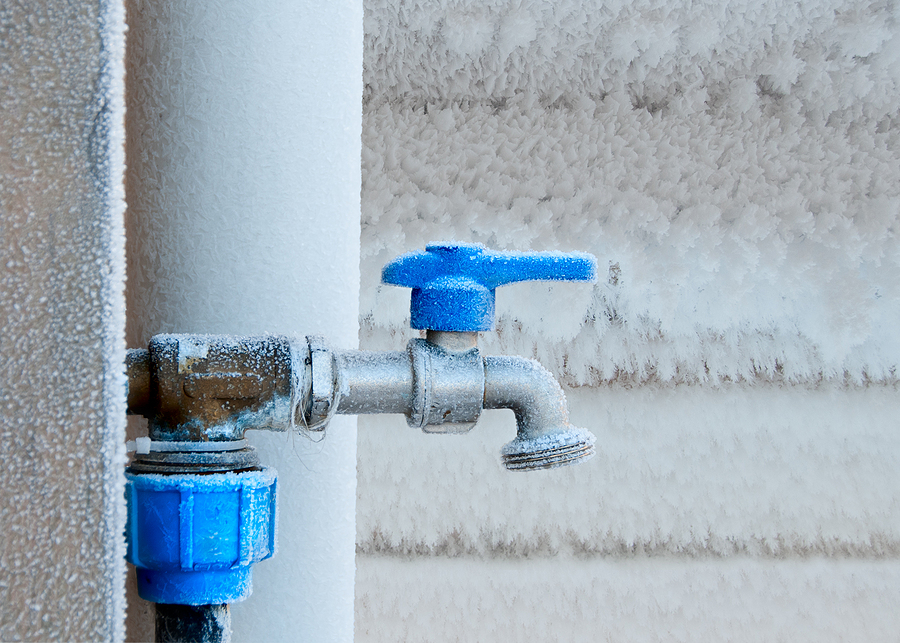
The short version:
- Walk the building now and note every line on an exterior wall, in an unheated space, or in a vacant suite.
- Label and test the main shutoff and zone valves so anyone on site can close them.
- Disconnect hoses, drain exterior spigots, and insulate and air-seal exposed runs.
- Keep every space that contains plumbing at 55°F or higher, including closed suites.
- Book the annual backflow test, water heater service, and drain and grease trap cleaning before holiday volume and the first cold snap.
What Does Winterizing Commercial Plumbing Mean?
Winterizing commercial plumbing is the set of inspections, repairs, and shutdown steps that protect a building’s water and drain systems from freezing and from the cold-weather failures that follow. For an occupied building, it usually means freeze protection: keeping heat on, insulating exposed lines, and closing off cold air. For a seasonal, vacant, or temporarily closed space, it can mean a full drain-down, where a licensed plumber shuts off the water, drains the system, and protects traps and fixtures.
Commercial properties carry risks that single-family homes rarely face. Long pipe runs cross warehouses and above-ceiling spaces, loading docks have large doors that stay open, backflow assemblies sit outdoors, restaurant kitchens depend on grease traps, and water heaters run all day. In a multi-tenant building, one unheated suite can flood the units below it, which is why winterizing is a property-wide task, not a tenant-by-tenant one.
Why Commercial Plumbing Freezes and Fails in Northeast Ohio
Cleveland Water points out that a single hard overnight freeze is enough to burst an outdoor spigot or a pipe. The mechanism is pressure: as water turns to ice, it expands, and pressure builds between the ice plug and the nearest closed valve or fixture until the pipe or fitting splits at its weakest point. The damage often stays hidden until the ice melts. These are the conditions that set it up in commercial buildings:
- Exposed lines in unheated spaces. Mechanical rooms, above-ceiling areas along exterior walls, storage rooms, and loading dock bays hold pipe that has no heat source of its own.
- Cold air infiltration. Dock doors that stay open, gaps around pipe penetrations, damaged windows, louvers, and vents can blow cold air directly across a supply line.
- Heat setbacks and vacant suites. Deep after-hours setbacks, closed suites with the heat off, and a heating failure on a cold night all let a space fall below freezing.
- Outdoor fixtures left connected. Hose bibs, wall hydrants, and irrigation connections with hoses attached trap water inside the fixture.
- Backflow assemblies in exposed locations. Assemblies installed outdoors or in unheated enclosures can freeze and crack.
- Low-use lines. Water that sits still freezes first, so rarely used restrooms, janitor sinks, and dead-end branches are the usual starting points.
- Aging pipes and fittings. Older supply lines have less margin when pressure spikes during a freeze.
- Small leaks. Moisture around a slow leak keeps insulation wet and pipes cold, and it can freeze into larger damage.
Warning Signs Your Building Is at Risk This Winter
Several of these signs are minor on their own. Together they describe a building that needs attention before the next hard freeze.
- Water slows to a trickle, or stops, at fixtures on exterior walls on a cold morning.
- Frost, ice, or heavy condensation on exposed pipes.
- Pipes that look bulged, cracked, or stained at joints.
- Water stains, bubbling paint, damp drywall, or soft ceiling tiles near exterior walls or above-ceiling plumbing.
- Rooms that stay cold even though the thermostat reads normal, especially along plumbing walls.
- Slow floor drains, or standing water at roof drains, scuppers, and trench drains after snowmelt.
- Water heater or boiler short-cycling, error codes, or no hot water on cold mornings.
- A water meter that keeps moving when every fixture is off after a thaw, which can indicate a hidden leak.
Facility Team Tasks vs. Work for a Licensed Plumber
Your maintenance staff or property manager can complete the first pass. The items that involve pressure, heat, backflow protection, or opening walls belong with a licensed plumber.
| Task | Facility team or property manager | Licensed plumber |
|---|---|---|
| Building walk-through | Spot exposed lines, take photos, note unheated areas | Confirms the risk, recommends insulation, rerouting, or heat |
| Hose bibs and wall hydrants | Disconnect hoses, close interior shutoffs, drain spigots | Replace failed fixtures, install frost-free hydrants |
| Pipe insulation | Accessible straight runs with foam sleeves | Tight spaces, large-diameter lines, complex runs |
| Heat cable | Visual check for damaged jackets | Specify, install, and test with a licensed electrician |
| Thermostat settings | Set and verify the 55°F floor in every plumbed space | Flags cold spots that the thermostat does not show |
| Backflow assemblies | Know where they are and keep the area clear | Test, repair, certify, and advise on freeze protection |
| Water heaters and boilers | Note leaks, noise, and error codes | Service, flush, safety checks, repair or replace |
| Drains and grease traps | Keep floor drains clear and report slow drains | Hydro-jetting, camera inspection, grease trap service |
| Frozen or split pipes | Open the faucet, apply gentle heat to an accessible pipe | Locate the freeze, thaw safely, repair splits, restore service |
| Drain-down of vacant space | Decide whether to heat or drain | Perform the drain-down and the spring restart |
The 10-Step Pre-Freeze Checklist for Commercial Plumbing
Work through these steps in order. Steps 1 through 5 are quick protections to finish before the first hard freeze, and steps 6 through 10 are service items to book now.
1. Walk the Building and Map Freeze-Exposed Plumbing
Start with a daylight walk-through of the whole property, including closed suites, mechanical rooms, storage areas, and the roof. Mark every water line on or near an exterior wall, every line in an unheated space, and every fixture that sees little use. Photograph shutoffs and problem areas so the notes are usable by whoever is on duty during a cold night. This map drives every other step on the list.
2. Find, Label, and Exercise the Main Shutoff and Zone Valves
Everyone who might be on site when a pipe lets go should know where the main shutoff is and how to close it. Cleveland Water recommends labeling the main shutoff, and the same advice applies to commercial buildings with riser valves, tenant isolation valves, and zone valves. Turn each valve through its full range once a year. A valve that has not moved in a decade often will not close when it is needed, and one that leaks at the stem should be replaced by a licensed plumber before winter.
3. Disconnect Hoses and Shut Down Exterior Hose Bibs and Wall Hydrants
Remove and store hoses, splitters, and timers. Close the interior shutoff to each outdoor spigot where one exists, then open the spigot to drain the line. Fixtures that drip after shutoff, or that have no interior valve, are candidates for frost-free replacement. Water trapped behind a connected hose can freeze and split the fixture, and a hidden split often goes unnoticed until the spring thaw.
4. Insulate and Air-Seal Exposed Lines
Insulate accessible supply lines in unheated areas with pipe insulation sized for the pipe, and seal air leaks where lines pass through walls, floors, and roof curbs. Cold air moving across a line does more harm than still cold air. Heat cable can protect specific runs that cannot be insulated or heated, but it must be listed for the pipe material, installed to the manufacturer’s instructions, and inspected each fall. Heat cable supplements building heat; it does not replace it.
5. Set a Minimum Temperature for Every Area With Plumbing
Cleveland Water advises keeping the thermostat at 55°F or higher when a building is empty, and IBHS lists the same threshold in its winter readiness guidance. Apply that floor to every space that contains plumbing: closed suites, back-of-house storage, mechanical rooms, and areas behind unheated vestibules. Confirm that after-hours setbacks never drop a space below it and that heating equipment in remote areas actually runs. A thermostat protects the air around it, not a pipe in a cold exterior wall, so pair this step with the insulation and sealing in step 4.
6. Test and Protect Backflow Assemblies
Where a backflow preventer is required, Ohio’s backflow rule (OAC 3745-95-06) calls for inspection and operational testing at installation or repair and at least once every twelve months. The test must be performed by a person approved by the water supplier and acceptable to the Ohio EPA director as qualified, and the consumer keeps the records. Fall is a practical time to complete the annual test because the technician can also check that outdoor assemblies are protected from freezing and that shutoffs are reachable. An assembly that freezes can crack or lose internal parts, so ask whether an insulated enclosure or heated cabinet suits your location.
Ohio Buckeye Plumbing provides backflow prevention testing and repair for commercial properties across Northeast Ohio. For more background, see our guide to RPZ, DCVA, and PVB devices and why backflow failures often go unnoticed until water tests fail.
7. Service Water Heaters and Boilers Before Heating Season
Cold incoming water and heavier winter demand push water heaters hard. A pre-winter service visit checks relief valves, burners or elements, venting, expansion tanks, and visible leaks, and flushes sediment where appropriate. Mineral build-up shortens equipment life, a topic covered in how hard water shortens the life of tank and tankless water heaters. Tankless units in unheated rooms also need freeze protection and a clear condensate drain. Ohio Buckeye Plumbing services commercial water heaters and commercial tankless water heaters.
8. Clear Drains, Roof Drains, and Grease Traps Before Winter
Winter changes how drains fail. Fats and grease solidify faster in cold lines and in outdoor or unheated interceptors, roof drains and scuppers clog with fall leaves, and snowmelt tests every floor drain, storm drain, and downspout connection on the property. Schedule grease trap cleaning and maintenance before holiday volume peaks, clear trench and floor drains, and use commercial drain cleaning or hydro-jetting on lines with a history of slow drainage. A video camera sewer inspection shows whether the cause is buildup, roots, or a structural defect. Our comparison of snaking vs. hydro-jetting explains when each method makes sense.
9. Repair Slow Leaks, Weeping Valves, and Failing Fixtures
Small leaks wet insulation, stain ceiling tiles, and keep exposed lines damp and cold. A dripping supply stop, a running toilet, or a weeping valve is easy to overlook in October and far more disruptive in January. Add a restroom-by-restroom check to the walk-through and book repairs now through commercial fixture services. The risks of waiting are laid out in our article on how ignoring minor leaks leads to major commercial plumbing emergencies.
10. Decide on Drain-Down for Vacant, Seasonal, or Long-Closure Spaces
If a suite, building, or seasonal operation will sit without heat or occupancy, a licensed plumber should shut off and drain the system, protect traps and fixtures, and document what was done. The alternative is to keep the space heated to the minimum temperature and checked on a schedule, which suits short vacancies. Do not leave a space unheated and assume it will be fine, because ice forms first in lines with little or no flow. Whichever approach you choose, put it in writing so tenants, owners, and staff know who is responsible. Our guide to protecting multi-unit properties covers shared-building coordination in more detail.
Insulation, Heat Cable, Maintained Heat, or Drain-Down: Which Fits?
Each protection method has a job it does well and a limit to know about. Most buildings combine two or three.
| Method | Best for | Strengths | Limits |
|---|---|---|---|
| Maintained building heat (55°F floor) | Occupied buildings and short vacancies | Protects the whole space; simple to manage | Fails if heating fails or cold air hits an exterior-wall pipe; needs monitoring |
| Pipe insulation and air sealing | Exposed lines in cold or unheated zones | Slows heat loss; low maintenance | Slows freezing but cannot stop it without some heat source |
| Heat cable (heat trace) | Specific exposed runs that cannot be insulated or heated | Targeted protection where nothing else works | Needs power, correct installation, and yearly inspection; failure can go unnoticed |
| Drain-down | Vacant, seasonal, or long-closure spaces | Removes the water, so nothing is left to freeze | Needs a licensed plumber, a restart procedure, and a spring leak check |
A Practical Timeline for Northeast Ohio Properties
| When | What to complete |
|---|---|
| Late October, before the first hard freeze | Steps 1 to 5: walk-through, shutoffs, hoses and hose bibs, insulation and air sealing, minimum temperatures |
| Early to mid November | Steps 6 to 9: backflow test and protection, water heater and boiler service, drain and grease trap cleaning, leak and fixture repairs |
| Before the first cold snap | Step 10 and the cold-snap plan below: drain-down decisions, posted contact list, shutoff training for opening and closing staff |
| Spring | Follow-up visit to check for winter damage, restart any drained spaces, and review what worked |
This fall-and-spring rhythm matches how preventive maintenance is usually scheduled: most businesses benefit from service twice a year, and high-use facilities such as restaurants may need quarterly visits.
Your Cold-Snap Plan: What to Do When the Forecast Turns Severe
Post this list where opening and closing staff will see it.
- Confirm heat is running in every area with plumbing, including closed suites and mechanical rooms.
- Open cabinet doors under sinks on exterior walls in restrooms, break rooms, and kitchens so warmer air reaches the pipes.
- Keep dock doors, roll-up doors, and vestibule doors closed except during active loading.
- Let a faucet drip during the coldest nights; Cleveland Water suggests the one farthest from the water meter.
- Check unoccupied spaces and exterior-wall plumbing at the start and end of each business day.
- Post the shutoff map and the after-hours plumbing number where staff can see them.
- After the cold passes, check for damp spots, low pressure, and new stains, since a split pipe can stay hidden until it thaws.
If a Pipe Freezes or Bursts: First Steps
- If water is leaking, close the main shutoff or the nearest zone valve. Keep people away from wet floors, and stay clear of water near electrical equipment until a licensed professional makes the area safe.
- If a line is frozen but not leaking, open the nearest faucet and apply gentle heat to an accessible section. Never use an open flame or a torch.
- Call a licensed plumber for 24/7 emergency plumbing. A pipe that froze may already be split and will leak when it thaws.
- Photograph the damage, move stock and equipment out of the wet area if it is safe, and keep records for your insurance claim.
- Do not restore water to the affected section until the repair has been made and checked.
Our guides to what to do in a plumbing emergency and five ways to prevent frozen pipes cover the same situations in more detail.
Winter Plumbing Risks in Northeast Ohio: Frost Dates, Lake Erie, and Older Buildings
Freeze timing varies across the region. The News 5 averages put the first freeze at about October 28 in Cleveland and about October 19 in Akron-Canton, so a business in the Cleveland suburbs or the Akron area can see its first hard freeze before Halloween in some years and well into November in others. Treat the averages as a planning date, not a guarantee.
Lake Erie shapes the season as well. Cold air crossing open water brings lake-effect snow and gusty wind to the lakeshore and the snowbelt east of Cleveland, and repeated thaw and refreeze cycles stress roof drains, outdoor assemblies, and anything that holds standing water. Wind driven across an open parking lot or loading dock can chill a pipe in an exterior wall even when the room reads normal.
Building age matters too. Older retail strips, mixed-use blocks, and offices from the 1960s through the 1980s often have more plumbing along exterior walls and above ceilings, and older supply lines have less margin when a cold night hits. Our article on why aging supply lines fail without preventive replacement planning explains how to spot lines that deserve attention before winter.
Each water supplier, including Cleveland Water and municipal utilities, sets its own backflow program and approves its own testers, so confirm your supplier’s requirements when you schedule the annual test. Ohio Buckeye Plumbing performs commercial plumbing work in Strongsville, Cleveland, Akron, Medina, Solon, and across Northeast Ohio.
Why Northeast Ohio Businesses Choose Ohio Buckeye Plumbing
| What We Offer | What It Means for You |
|---|---|
| Licensed by Ohio OCILB | State-certified plumbing expertise on every commercial and residential job |
| Fully Insured: General Liability + Workers Compensation | Zero liability on your property if anything goes wrong |
| BBB Accredited, A+ Rating | Third-party verified track record of customer satisfaction |
| 24/7 Emergency Service | We respond at any hour for burst pipes, backups, and urgent plumbing situations |
| 20+ Years Serving Northeast Ohio | Deep local knowledge of infrastructure, codes, and permit processes |
| Family-Owned Local Business | You are treated like a neighbor, not a service ticket |
| Scheduled Around Your Operating Hours | Maintenance visits are structured around your business hours to limit downtime |
| Upfront Pricing Before Any Work Begins | No surprise charges when the invoice arrives |
| 100% Satisfaction Guarantee | We stand behind every repair and installation we complete |
Read verified reviews on Google, Angi, and HomeAdvisor before you call.
Frequently Asked Questions: Winterizing Commercial Plumbing in Northeast Ohio
When should I winterize my commercial plumbing in Northeast Ohio?
Start before the first hard freeze, ideally in October. News 5 Cleveland lists the average first freeze at about October 28 for Cleveland and about October 19 for Akron-Canton, and any given year can arrive earlier or later. Complete the exposed-plumbing, shutoff, and hose bib steps first, then book backflow testing, water heater service, and drain cleaning for early to mid November. If the first freeze has already passed, begin with the quick protections and schedule the rest right away.
What temperature should I keep a commercial building to prevent frozen pipes?
Cleveland Water advises keeping the thermostat at 55°F or higher when a building is unoccupied, and IBHS cites the same minimum. Apply that floor to every space that contains plumbing, including vacant suites, storage rooms, and mechanical rooms. A thermostat reads the air at its own location, so pipes in exterior walls or near dock doors can still run colder than the room. Insulation, air sealing, and closed doors protect those spots.
What is the difference between winterizing and freeze protection?
Freeze protection keeps water in the system and keeps it from freezing, using heat, insulation, air sealing, and monitoring. It suits occupied buildings. Winterizing in the strict sense means draining the system so no water is left to freeze, which suits seasonal, vacant, or long-closure spaces and is performed by a licensed plumber. Most Northeast Ohio businesses need freeze protection for the main building and a drain-down plan for any space that will sit empty.
Do I need to winterize a vacant suite or an empty commercial building?
Yes. An unoccupied space has no one to notice a problem, and a leak in one suite can damage the tenants below it. You have two options: keep the space heated to a safe minimum and check it on a schedule, or have a licensed plumber drain the system and protect traps and fixtures. Document the choice and tell the owner, property manager, and neighboring tenants. Ohio Buckeye Plumbing can perform the drain-down and the spring restart, including a leak check.
How do I protect exterior hose bibs and wall hydrants from freezing?
Disconnect and store every hose, close the interior shutoff to the fixture if one exists, and open the outdoor spigot so the line drains. Fixtures that drip after shutoff, or that have no interior valve, are good candidates for frost-free replacement. Cleveland Water’s winter guidance includes draining hoses because water trapped behind a connected hose can freeze and split the spigot.
Should I leave faucets dripping during a cold snap?
Cleveland Water suggests letting a faucet drip in very cold weather, and recommends the faucet farthest from the water meter so water keeps moving through the whole run. Moving water is harder to freeze, but a drip does not protect pipes in an open wall cavity or beside a dock door, so treat it as a supplement to insulation and heat. In a large building, pick a few far-end fixtures and ask your plumber which lines are most exposed.
Is heat cable a good way to protect commercial pipes?
Heat cable can protect specific exposed runs that cannot be insulated or heated any other way, but it works only when it is powered, listed for the pipe material, and installed to the manufacturer’s instructions. Inspect it every fall for damaged insulation or cracked jackets, and have a licensed electrician handle the electrical connections. A failed cable gives no warning, so treat it as a supplement to building heat and insulation, not a replacement.
Do backflow preventers need special attention in winter?
Yes. Assemblies installed outdoors or in unheated enclosures can freeze, and ice can crack the body or damage internal parts. Ohio’s backflow rule, OAC 3745-95-06, calls for testing at installation or repair and at least once every twelve months by a person approved by the water supplier, with records kept by the consumer. Scheduling the annual test in the fall lets the technician check freeze protection at the same visit.
What should staff do first if a commercial pipe bursts?
Close the main shutoff or the nearest zone valve, keep people away from wet floors, and stay clear of water near electrical equipment until a licensed professional makes the area safe. Then call an emergency plumber, move stock and equipment out of the wet area if it is safe to do so, and photograph the damage for your insurance claim. A labeled shutoff map is what makes these first minutes fast, which is why it is part of the checklist.
How do I thaw a frozen commercial pipe safely?
For an accessible, intact pipe, open the nearest faucet so water can flow as the ice melts, then apply gentle heat with a hair dryer or warm towels, working from the faucet end back toward the frozen spot. Never use an open flame or a torch. If water is leaking, the frozen section is inside a wall or ceiling, or the pipe will not thaw, close the shutoff and call a licensed plumber, because a pipe that froze may already be split and will leak once it thaws.
Can freezing damage drain lines, floor drains, and roof drains as well as supply lines?
Yes. Standing water in traps and low-use floor drains in unheated areas can freeze, condensate lines can ice up, and roof drains and scuppers clogged with leaves back up during snowmelt and freeze-thaw cycles. Pre-winter drain cleaning and a camera inspection of lines with a history of slow drainage help identify trouble before it shows up as a backup. Ohio Buckeye Plumbing provides hydro-jetting and video camera inspection for commercial drain systems.
Should restaurants schedule grease trap service before winter?
Yes. Holiday volume arrives just as cold weather makes fats and grease solidify faster in lines and interceptors, especially those in unheated or outdoor locations. Schedule grease trap cleaning before the busy season, clear floor and trench drains, and keep a record of each service. How often a given trap needs service depends on kitchen volume and local requirements, so ask your plumber to set a schedule based on how your kitchen actually operates.
Does commercial property insurance cover frozen pipe damage?
Coverage depends on your specific policy, and Ohio Buckeye Plumbing cannot advise on coverage. Many policies expect reasonable precautions such as maintaining heat and addressing known problems, so a documented pre-freeze inspection, a shutoff map, and maintenance records are worth having. Ask your insurance agent which cold-weather requirements apply to your building and to any vacant space.
Do commercial water heaters and boilers need service before winter?
Yes. Incoming water is colder in winter and demand is higher, so units work harder just when a failure would be most disruptive. A pre-winter visit checks relief valves, burners or elements, venting, expansion tanks, and visible leaks, and flushes sediment where appropriate. Tankless units in unheated rooms also need freeze protection and a clear condensate drain. Ohio Buckeye Plumbing services both tank and tankless commercial systems.
How do I schedule a pre-freeze commercial plumbing inspection with Ohio Buckeye Plumbing?
Call (440) 283-9377 or request service online. We provide commercial plumbing preventive maintenance and 24/7 emergency service across Strongsville, Cleveland, Akron, and the rest of Northeast Ohio, and we schedule visits around your operating hours. Most businesses benefit from maintenance twice a year, a fall visit before the freeze and a spring visit after it, and high-use facilities such as restaurants may need quarterly service. We are licensed through Ohio OCILB, fully insured, and BBB accredited with an A+ rating.
When to Call Ohio Buckeye Plumbing About Winter Plumbing Risks
Call before the freeze if your walk-through turns up exposed lines you cannot protect yourself, if a backflow assembly is due for its annual test, if a vacant suite needs a drain-down, or if your water heaters and drains have not had service this year. Call right away if you see frost on a supply line, lose water pressure on a cold morning, or find a leak. Ohio Buckeye Plumbing is licensed through the Ohio Construction Industry Licensing Board, fully insured for general liability and workers’ compensation, and BBB accredited with an A+ rating. We serve Strongsville, Cleveland, Akron, and the rest of Northeast Ohio, and our team is available 24/7 for emergencies.
Schedule a Pre-Freeze Plumbing Walk-Through in Northeast Ohio
Ohio Buckeye Plumbing is a family-owned team with more than 20 years of experience, OCILB licensing, full insurance, and a 100% satisfaction guarantee. Call (440) 283-9377 to schedule a commercial plumbing preventive maintenance visit before the first freeze, or to reach our 24/7 emergency line if a pipe has already failed.